
What this solves
Siding replacement Rancho Cordova at a glance
Siding replacement is the right service when your cladding is failing across an elevation and the wall behind it needs a real look. We remove the old siding, repair any soft sheathing, correct the flashing, and install new cladding that sheds water at every window and door. Cost tracks tear-off labor, hidden repairs, and opening count more than raw square footage. Condition drives it. To scope it, call (916) 720-9009 or send elevation photos through our contact form.
Not sure what fits?
Send the project details and attachments.
Tell us the city, property type, opening, and service you have in mind. A few details make it easier to point you toward the right glass, door, railing, siding, skylight, or custom glass path.
Removal
What removal reveals behind failing cladding
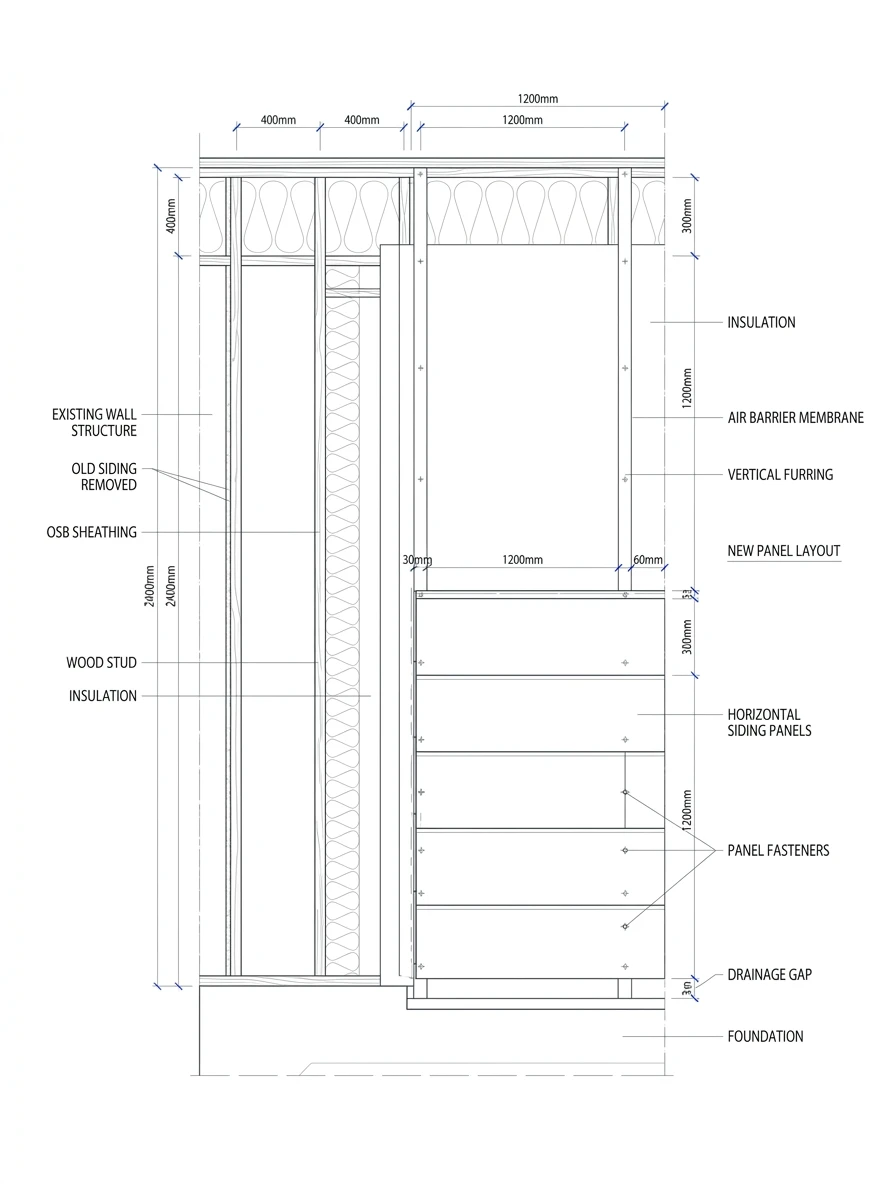
Removal is where a replacement job stops being a guess. Once the old siding comes off, the wall shows its real story. Sheathing is the structural panel layer under the siding that ties the wall together and carries the housewrap. On a recent Rancho Cordova tear-off, we found soft sheathing at three window corners that nobody could see from outside. In fact, the paint outside still looked fine. Common finds include missing wrap laps, trim returns that were never flashed, and slow-leak stains behind the finish. As a result, a fair estimate leaves room to adjust once the wall is open. For example, a house with peeling paint but dry, flat sheathing is a very different job from one that hides rot at every opening. That is the real variable. It happens often. Clear photos of your worst elevations help us frame the likely scope before we pull a single panel.
Upgrade
Where replacement becomes a wall upgrade
Replacement is the best moment to decide between a plain re-cover and a better wall. Owners often move from aging wood or brittle early vinyl to a tougher profile. Fiber cement siding is a dense board of cement, sand, and cellulose that resists rot, fire, and Sacramento heat better than old wood. The face material is the easy part. The bigger upgrade usually hides in the details. We reset the wrap sequence, correct the head flashing, and clean up trim returns at every window and door. In our experience, the opening details cause more repeat leaks than the face material ever does. Details win. In particular, mismatched trim on a busy elevation makes new siding still look partial. Notably, that finish detail is what most owners notice first. Trim depth can also be reset so the wall looks intentional, not patched. In other words, if you want to stop recurring leaks, fix the openings, not just the surface.
Pricing
What moves siding replacement cost up or down
Replacement cost usually rises on three things: demolition, hidden repairs, and opening complexity. Square footage still counts. Flashing is the metal or membrane that directs water out of an opening and back onto the siding face. But tear-off labor, disposal, and second-story access often move the price more. Access matters. When we measured a two-story elevation, the window count drove more labor than the wall area did. If the old siding comes off clean and the sheathing is dry, the rebuild stays predictable. In contrast, repeated moisture damage or wrap corrections expand the scope fast, because those must be fixed first. As a result, two homes of the same size can price very differently. Material choice, story height, and dormers add another layer. For a sharper first number, send photos of each elevation, note any staining, and tell us the existing siding type. That detail shows a clean replacement versus a deeper wall repair.
Timeline
How long does siding replacement take on a home?
Replacement runs longer than a fresh install. The old wall has to come off and get inspected first. Tear-off is the phase where the crew strips the old cladding, trim, and failed flashing down to the sheathing. A single-story home often takes a week or more, depending on material and repair. We stage the job so open wall never sits exposed overnight. Next, we dry-in the wall with new housewrap and flashing before any new boards go up. On one job, we discovered the previous crew had caulked over rot instead of replacing it. As a result, that elevation added a day. That said, most delays come from hidden repairs, not the new cladding. Similarly, weather can shift a tight schedule. Plan for it. We give you a firm date after the site measure, once the likely surprises are on the table.
What to expect
What we check before old siding is removed and reordered
We scope siding replacement by separating what we know from what only removal can confirm. Useful first details are the existing material, the rough age, which elevations fail, and whether windows or doors change too. Housewrap is the water-resistive barrier that lets the wall drain and dry behind the siding. As a licensed contractor under CSLB #1115205, we correct flashing and wall details to meet the California Building Code, not just cover them. You can verify our license through the CSLB license lookup and read more on our about us page. When we ran a moisture check on one Rancho Cordova job, the wrap laps were reversed at every sill. In addition, the head flashing was missing over two windows. Therefore the scope needed real flashing repair, not like-for-like panel counting. We caught it early. That is the difference between a clean install and a recurring leak.
Related services
Which siding page fits your project?
Siding replacement often branches into nearby work once the cause is clear. If the wall is bare or brand new, siding installation fits better, because it plans fresh cladding instead of a tear-off. Alternatively, if only a few openings need flashing or trim repair, exterior siding work is the tighter scope. When old windows come out at the same time, residential glazing matters, since trim depth and flashing order should be solved together, not twice. For the full range of cladding services, start at our siding contractor hub. Specifically, pick the page that matches your real trigger, and the quote stays focused on the actual wall problem.
Reviewed by Yuliya Dereviaga, Project Manager
FAQ
Questions people ask before calling.
How do I know if my siding needs full replacement?
Widespread cracking, warping, fading, or moisture stains on interior walls usually mean the cladding system has failed. If several sections are damaged or the sheathing behind the siding feels soft, patching single panels will not solve the problem. We inspect the wall on site first. In particular, the hidden condition behind the panels matters more than the visible surface.
Will you repair sheathing damage found during siding removal?
Yes. Installing new siding over rotten sheathing wastes the new material. We document any sheathing damage during removal and include the repair in the scope before new housewrap and cladding go on. For example, a soft window corner gets cut out and rebuilt so the new wall stays dry.
Can I change siding material during replacement?
Yes. Replacement is the best time to switch from wood to fiber cement, or from old vinyl to a modern profile. Material changes can affect trim depth at windows and doors. As a result, we confirm the opening details before ordering, which keeps the finished trim clean instead of forced around old conditions.
How long does siding replacement take compared to a new install?
Replacement takes longer because of removal, sheathing inspection, and any repair before new cladding goes on. A single-story home may take a week or more, depending on material and wall complexity. Notably, most of the added time comes from hidden repairs. We provide a firm schedule after the site measure.
Next step
Need glass, storefront, door, railing, siding, skylight, or custom glass work?
Call Capital Glazing or send project details through the quote request form. Include the property city, service type, opening details, and attachments if available.