
Capital Glazing guide
Fireplace Glass Replacement in Sacramento (2026)
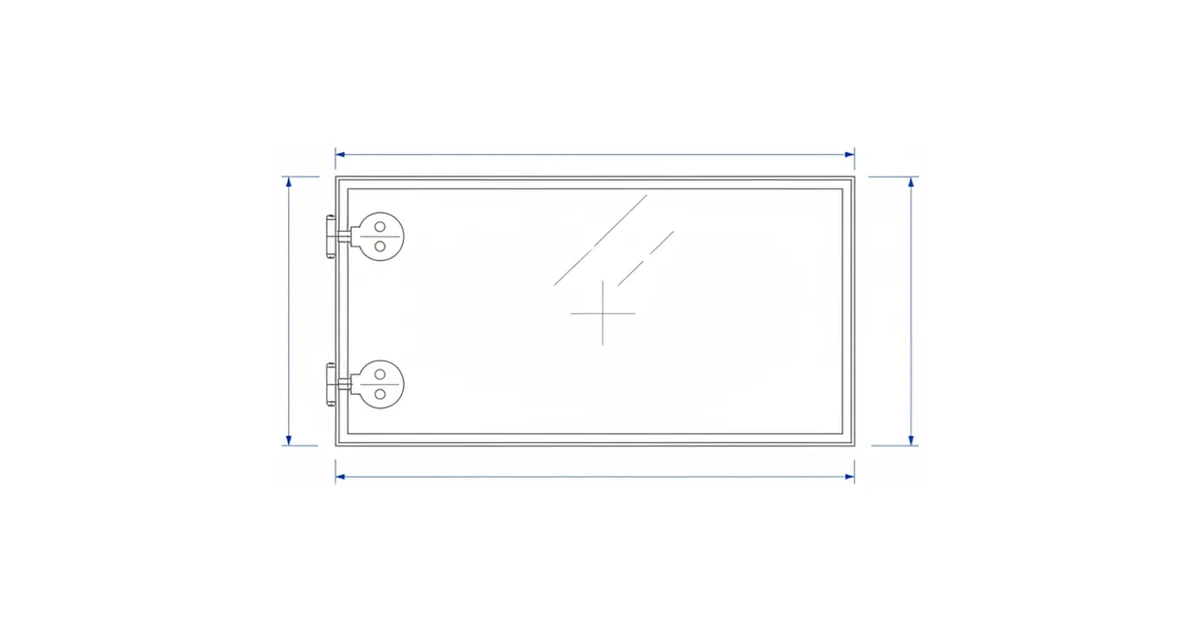
If your hearth glass cracked, clouded, or fell out, fireplace glass replacement comes down to one decision before anything else: tempered or ceramic. Tempered glass is fine for decorative fireplace doors, where the flame stays away from the panel. Ceramic glass is required for wood stoves and high-heat inserts, where temperatures can run far past what tempered can survive. Put the wrong glass in a high-heat appliance and it can shatter. The right call depends on your exact unit, so prices here are ranges meant to be localized with a quote. Email info@cglazing.com or call Capital Glazing at (916) 720-9009 and we will match the correct glass to your fireplace.
Key Takeaways
- Tempered glass is for decorative fireplace doors used with the doors open; it is rated only around 400 to 500 degrees F. (Demers Glass)
- Ceramic glass (NeoCeram, Pyroceram, Robax) is required for wood stoves and airtight, high-heat inserts; it handles continuous temperatures near 1,290 degrees F. (Total Hearth)
- Never substitute tempered where ceramic is required. Tempered glass can shatter under sustained high heat. (Fireplace Doors Online)
- Costs land roughly between $100 and $350 for most panels, driven by size, thickness, shape, and glass type. (Total Hearth)
What is the difference between tempered and ceramic fireplace glass?
The short version: heat resistance versus impact resistance. Tempered glass is heat-treated safety glass that is strong against impact but limited on heat, holding up only to about 400 to 470 degrees F before it weakens and can shatter. Ceramic glass is a glass-ceramic engineered for extreme heat, rated for continuous temperatures near 1,265 to 1,292 degrees F, roughly three times the heat tolerance of tempered. (Total Hearth)
That gap is why the two are not interchangeable. Tempered reflects heat rather than transmitting it, so manufacturers discourage burning a fire with a tempered door closed; heat builds behind the glass and pressure can crack it. (North Glass) Ceramic, by contrast, lets heat pass into the room and shrugs off thermal shock, which is exactly what a wood stove demands.
One more thing worth naming. NeoCeram, Pyroceram, and Robax are essentially the same product under different trademarks. There is no real visual or performance difference between them; the names are just brands. (Total Hearth) So if a shop says they carry one and not the others, you are usually fine either way.
Which glass does my fireplace need?
Match the glass to how the appliance runs. If the fire sits well away from the panel and you keep the doors open while burning, tempered works. If the unit is airtight or built to throw real heat, like a wood stove, pellet stove, or high-efficiency insert, you need ceramic.
A practical rule of thumb from the trade: use ceramic glass for wood stoves, and tempered glass for decorative fireplace doors. (Demers Glass) High-output units that run in the 600 to 1,000 degree range specifically require ceramic such as Pyroceram. (Total Hearth)
| Use this glass | For these appliances |
|---|---|
| Tempered | Decorative fireplaces, bifold doors, doors open while burning |
| Ceramic | Wood stoves, pellet stoves, coal stoves, airtight high-heat inserts |
| Ceramic | AFUE-rated direct vent units (require ceramic) |
AFUE-rated direct vent fireplaces specifically require ceramic replacement glass, not tempered. (Fireplace Doors Online) When in doubt, match the original glass type and check your owner’s manual. There is also a flip side: ceramic should not be installed on certain factory-built prefab units where the design relies on the glass to limit heat, so the correct answer is always the unit’s spec, not a guess. (Total Hearth)
Tempered vs. ceramic at a glance
| Property | Tempered | Ceramic |
|---|---|---|
| Continuous heat | ~400 to 470 F | ~1,265 to 1,292 F |
| Short-term peak | shatters above ~600 F | ~1,400 F |
| Strength against impact | High | Lower; cracks, not shatters |
| Thermal shock | Poor | Excellent |
| Relative cost | Lower | Higher |
Tempered wins on impact strength; ceramic wins on heat and thermal shock. (North Glass) One caveat on ceramic: it is heat-resistant, not a safety glass. It will not shatter into small pieces, but a hard knock can crack it into larger shards. (Total Hearth)
How much does fireplace glass replacement cost?
Most fireplace glass panels land somewhere between $100 and over $350, with the final number driven by your appliance. (Total Hearth) Tempered is the cheaper material because it does not need ceramic’s heat durability; ceramic costs more for the same reason it performs better. (Demers Glass)
| Glass type | Typical price range |
|---|---|
| Tempered (basic, DIY) | As low as ~$20 to $100 |
| Ceramic panel | ~$100 to $350 |
| Custom pattern cut | Add ~$40 per cut |
One supplier frames the spread plainly: depending on size and type, a panel can run from as little as $125 for tempered up to $600 or more for NeoCeram. (Dulles Glass) Pattern cuts add roughly $40 each, and polished edges cost extra over standard factory-sanded edges. (Fireplace Doors Online) Because pricing turns on size, thickness, shape, gaskets, and material, treat these as ranges and get a quote for your exact unit.
How is fireplace glass measured for replacement?
Measure the frame opening, not the old glass, then subtract for expansion. The single most common mistake is measuring a warped old panel; over years of heat cycling the glass can change shape, so the opening gives the true dimensions. (Total Hearth)
The method professionals use:
- Measure width at top and bottom, height at left and right, to the nearest 1/16 inch. Use the smaller of each pair.
- Subtract 1/8 inch from height and width for thermal expansion, or 3/16 inch per side on hard openings that also need gasket room. (Total Hearth)
- Check thickness at the edge with calipers; common options are 1/8, 3/16, and 1/4 inch. (Total Hearth)
That expansion gap matters more than people expect. Glass grows when heated, and a panel cut too tight has nowhere to go, so heat cycles build tension until it cracks. A small, deliberate gap is what lets the glass live a long life. Arched, corner-cut, and angled panels need a template or clear photos with the brand and model, since custom cuts are typically non-refundable.
A field note from our side: more than half the “broken glass” calls we get are not really about the glass. The gasket has gone hard and brittle, the frame has shifted, or the last panel was forced in with no expansion gap and finally split. We look at the whole door, not just the pane, before we cut anything.
Safety: use the right glass, and why a licensed glazier matters
This is the part to get right. Never put tempered glass in a wood-burning stove. When it shatters, and under that heat it will, the failure is sudden and the consequences are dangerous. (Total Hearth) Sustained temperatures above roughly 470 degrees F gradually weaken tempered glass, and exposure past about 600 degrees F can shatter it into small pieces. (One Day Glass)
A licensed glazier protects you on three fronts at once: the right material for your appliance, a correct fit with the proper expansion gap, and hardware torqued so it does not crack the panel during heat-up. Metal screws expand when hot, and over-tightening is a quiet way to ruin a fresh install. (Total Hearth) Capital Glazing is a licensed glazier under California CSLB #1115205, carrying B, C-17, and C-33 classifications, serving Rancho Cordova and the greater Sacramento area.
Another thing we have seen too often: someone orders a cheap online panel, it arrives a hair too big or the wrong material, and now they have lost a week and the money on a piece they cannot return. Confirming material and dimensions up front is the whole game.
Frequently asked questions
Can I use tempered glass in a wood stove?
No. Tempered glass tops out around 400 to 500 degrees F, and a wood stove runs far hotter, so the panel can shatter. Wood stoves, pellet stoves, and airtight inserts require ceramic glass. (Demers Glass)
Is NeoCeram the same as Pyroceram?
Effectively yes. NeoCeram, Pyroceram, and Robax are the same type of ceramic glass sold under different trademarks, with no meaningful difference in look or performance. (Total Hearth)
Why did my fireplace glass crack on its own?
Often it is not the heat alone but tension. A panel cut without an expansion gap, or pinched by warped framing or hardened gasket, builds stress through heat cycles until it splits. (Total Hearth)
How long does a replacement take?
Plan ahead. Sourcing and cutting a panel, especially custom-shaped ceramic, can take up to about a week, since many shops special-order ceramic rather than stocking it. (Fast Replacement Glass)
Should I measure it myself or have you do it?
For a standard rectangular tempered door, careful self-measurement works. For ceramic, arched, or angled panels, where mistakes are non-refundable, let us measure on site or template it. We also handle custom glass and run a full glass and mirror shop in Rancho Cordova.
About Capital Glazing
Capital Glazing is a licensed glazier based in Rancho Cordova, serving the greater Sacramento area. We hold California CSLB license #1115205 with B, C-17, and C-33 classifications, and we handle fireplace glass, custom cuts, and full glass-and-mirror work. The goal on every fireplace job is simple: the right glass for your appliance, fit correctly, installed safely. You can learn more about us or browse our custom glass options.
Ready to get the right glass in your fireplace? Request a quote and we will match the correct material to your exact unit. Email info@cglazing.com or call Capital Glazing at (916) 720-9009.