
Capital Glazing guide
Bay & Bow Window Glass Replacement in Sacramento (2026)
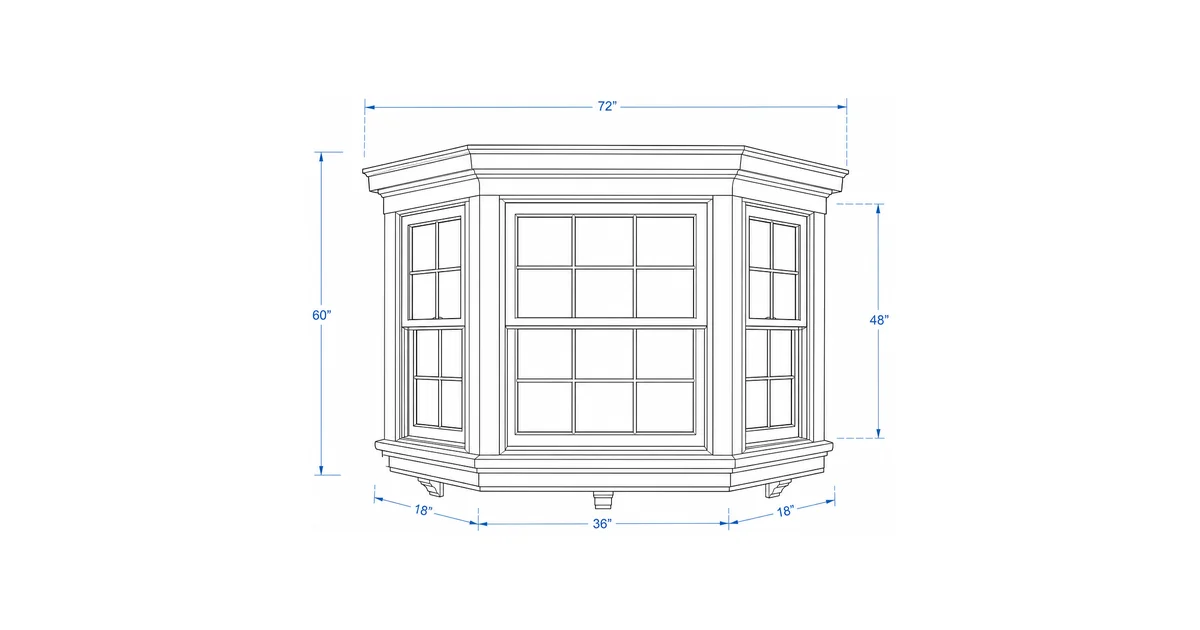
If your big center pane has fogged or cracked, the good news on bay window glass replacement is that you usually don’t replace the whole projecting unit — you swap the failed pane. Replacing one glass section runs roughly $300–$650 when the frame is sound, versus about $500–$3,800 to redo all the glass in a bay (HomeGuide, 2026; Fixr, 2026). Sacramento pricing depends on the size of that center pane, the glass type, and how hard it is to reach, so the only honest number is an on-site quote from a licensed glazier. Capital Glazing measures your bay in person and tells you whether one pane or the full unit needs glass.
A bay window is a three-panel assembly that projects out past the wall: a large fixed picture pane in the middle with two narrower windows set at an angle — usually 30, 45, or 90 degrees — on either side (This Old House; Pella).
A bow window is the curved cousin: four to six equal-sized panels that bend in a gentle arc instead of sharp angles, which is why a bow holds more glass and costs more to re-glaze (Angi).
Key Takeaways
- A foggy or cracked center pane usually means glass-only replacement, not a whole new bay.
- One pane runs about $300–$650; re-glazing a full bay runs about $500–$3,800 (HomeGuide, 2026; Fixr, 2026).
- The big center pane is often custom-sized and fixed, so it needs precise measuring.
- Large, low panes near a floor often must be safety (tempered) glass under California code.
What is a bay window vs a bow window?
A bay window has three panels — a wide fixed center flanked by two angled side windows that often open. A bow window curves through four to six equal panels for a softer, panoramic look (Pella). The practical difference for glass work: a bow has more panes and more seals, so there’s more that can fog and more to price.
Because a bow uses four or more windows while a bay uses three, it gives the glazier more individual units to assess and price (Pella).
| Feature | Bay window | Bow window |
|---|---|---|
| Panels | 3 (fixed center + 2 angled) | 4–6 equal, curved |
| Shape | Angular | Gentle arc |
| Glass to re-glaze | Less | More |
| Relative cost | Lower | Higher |
Can you replace just one pane in a bay window?
Yes — and most of the time that’s exactly the right move. If the frame, sash, and side windows are sound and only the center picture pane has fogged or cracked, you replace that one sealed unit and keep everything else. Glass-only work runs about $300–$650 per window section when the frame is in good shape (HomeGuide, 2026).
There’s one catch with modern panes. If your bay has double-pane insulated glass and a single layer breaks, you can’t replace just that one layer — the whole sealed unit comes out. Insulated glass is bonded at the factory, so the fix is a new sealed unit, not a single sheet (Glass and Auto, 2026).
An insulated glass unit (IGU) is the sealed sandwich of two or more panes separated by a spacer and filled with argon or another inert gas, bonded at the edges to insulate your home (Fixr, 2026). When that edge seal fails, the gas leaks out, humid air gets pulled in, and you get the haze trapped between the panes.
Why does the center picture pane fog up?
The fog is moisture sealed between the panes after the edge seal broke down. Once the seal fails, the inert gas escapes and damp air seeps in; when it cools, it condenses into a haze you can’t wipe away because it lives inside the glass. The repair is a new sealed unit, not a cleaning (Glass Doctor).
In a bay, the center is usually a large fixed pane that takes the most sun, so it’s often the first to fog. Drill-and-vent “defogging” is a cosmetic stopgap — it clears the haze but never rebuilds the seal or restores the gas, so the fog tends to come back (Fixr, 2026). That’s why our glass repair service in Rancho Cordova, CA replaces the sealed unit rather than chasing the fog.
How much does bay window glass replacement cost in Sacramento?
Expect a single sound-frame pane to land in the national $300–$650 range, with the large fixed center pane priced more like a picture window — roughly $175–$1,000 depending on size (HomeGuide, 2026; HomeGuide picture window guide). Re-glazing the whole bay can run $500–$3,800 because every angled panel is its own custom-sized unit. These are national and statewide ranges, not Sacramento quotes — your real number depends on the specifics, so we confirm it on site.
| Scope of work | What it covers | Typical national range |
|---|---|---|
| One fogged/cracked pane | New sealed unit, frame stays | $300–$650 |
| Large fixed center pane | Custom picture-window glass | $175–$1,000 |
| All glass in a bay | Center + both angled panels | $500–$3,800 |
| All glass in a bow | Four to six curved panels | $690–$1,800+ |
Sources: HomeGuide, 2026; Fixr, 2026; Angi, 2026.
What moves the number for a bay specifically:
- Center-pane size — large fixed picture glass costs more to fabricate.
- Glass type — Low-E and tempered cost more than plain glass.
- Access — second-story or hard-to-reach bays add labor (Modernize, 2026).
- Custom fabrication — odd sizes can take 2 to 6 weeks to make (HomeGuide, 2026).
Why does measuring and access matter so much on a bay?
Because a bay is several windows joined at angles, not one flat pane, every section needs its own precise measurement. The number of measurements scales with the bends in the unit, and old openings rarely sit perfectly square (Tracks-Direct). Get one width wrong and a custom pane won’t seat or seal.
A few realities make this work harder than a standard window:
- Angles multiply measurements — a two-bend bay needs more readings than a flat wall, and multi-angled bays need more still (Tracks-Direct).
- The overhang limits access — a bay projects past the wall, so reaching it from outside is awkward, especially on a second story (Glass Doctor).
- Size for the glass, not the hole — an IGU needs exact dimensions, not the rough opening minus a guess.
In the field, the mistake I see most is someone measuring the frame opening and ordering glass to that. The unit shows up a hair too big or too small, and now you’re waiting weeks for a refabricated pane. We measure each section at the top, middle, and bottom and order to the smallest reading, the way the trade does it (Window Gurus).
Does a bay window pane need safety glass?
Often, yes. A large fixed pane that sits low to the floor falls into what California code calls a hazardous location, and hazardous locations require safety glazing — tempered or laminated glass built to pass impact testing (CBC 2025, Ch. 24).
Under the California Building Code, glazing is treated as a hazardous location when the exposed pane is larger than 9 square feet, its bottom edge is less than 18 inches above the floor, its top edge is more than 36 inches above the floor, and there’s a walking surface within 36 inches (CBC 2025, Ch. 24, Sec. 2406.4.3). A typical floor-height bay picture pane hits all four. This is exactly why it matters to use a licensed glazier: a pro knows when code requires tempered glass and orders it stamped and marked, so your replacement passes inspection and is genuinely safer if someone walks into it.
When should you replace the whole bay instead of the glass?
Replace the full unit when the frame, sash, or seat board is rotted, warped, or water-damaged — new glass in a failing frame won’t seal or last. A whole-unit replacement also makes sense if most panes are fogging in waves or you want to upgrade the look (Glass and Auto, 2026).
| Your situation | Best move |
|---|---|
| One pane fogged or cracked, frame solid | Glass-only replacement |
| Frame, sash, or seat board damaged | Full unit replacement |
| Several panes fogging together | Re-glaze the failed units |
| Want a special tint, shape, or upgrade | Custom glass |
One field note worth sharing: seal failures tend to cluster. Panes installed together age together, so when the center fogs, an angled side pane on the same wall often follows. If your bay was built all at once, it’s worth having a glazier check every section in one visit rather than paying for repeat trips.
Frequently asked questions
Can I replace just the foggy center pane of my bay? Usually yes. If the frame and side windows are sound, you replace that one sealed unit and keep the rest. The center is often a large fixed picture pane, so it’s measured and fabricated to size.
Will cleaning remove the fog inside the glass? No. The haze is sealed between the panes where no cleaner reaches. If wiping both surfaces doesn’t clear it, the seal has failed and the unit needs replacing.
Why can a bow window cost more to re-glaze than a bay? A bow has four or more windows versus a bay’s three, so there can be more individual units to assess and price.
How long does a bay glass replacement take? Once the unit is fabricated to your measurements, the swap itself is usually a short visit. The wait is fabrication — custom or odd-sized panes can take 2 to 6 weeks to make.
Does my replacement pane have to be tempered? If the pane is large and low to the floor near a walkway, California code likely requires safety glazing. A licensed glazier confirms this on site and orders the correct stamped glass.
Get a straight answer on your Sacramento bay or bow
A fogged or cracked pane in a bay doesn’t usually mean a whole new window — in most cases the frame stays and only the failed glass changes, which keeps the cost down. The trick is measuring each angled section correctly and ordering the right glass, including safety glass where code calls for it. As a licensed Sacramento-area glazier (CSLB #1115205, classes B, C-17, C-33) based in Rancho Cordova, Capital Glazing measures your bay in person and tells you honestly whether you need one pane or the whole unit — no flat-rate guesswork.
Request a quote and we’ll measure on site, email info@cglazing.com, or call us at (916) 720-9009.
About Capital Glazing
Capital Glazing is a licensed glazier (CSLB #1115205) in Rancho Cordova serving the greater Sacramento region with glass repair, custom glass, and commercial glazing. This guide was written and reviewed by our licensed glazing team using current 2026 cost data, with every figure linked to its source. We publish national and California ranges rather than a single Sacramento average, because the real number depends on your window — learn more about us or request a quote.