
What this solves
Commercial glazing Sacramento at a glance
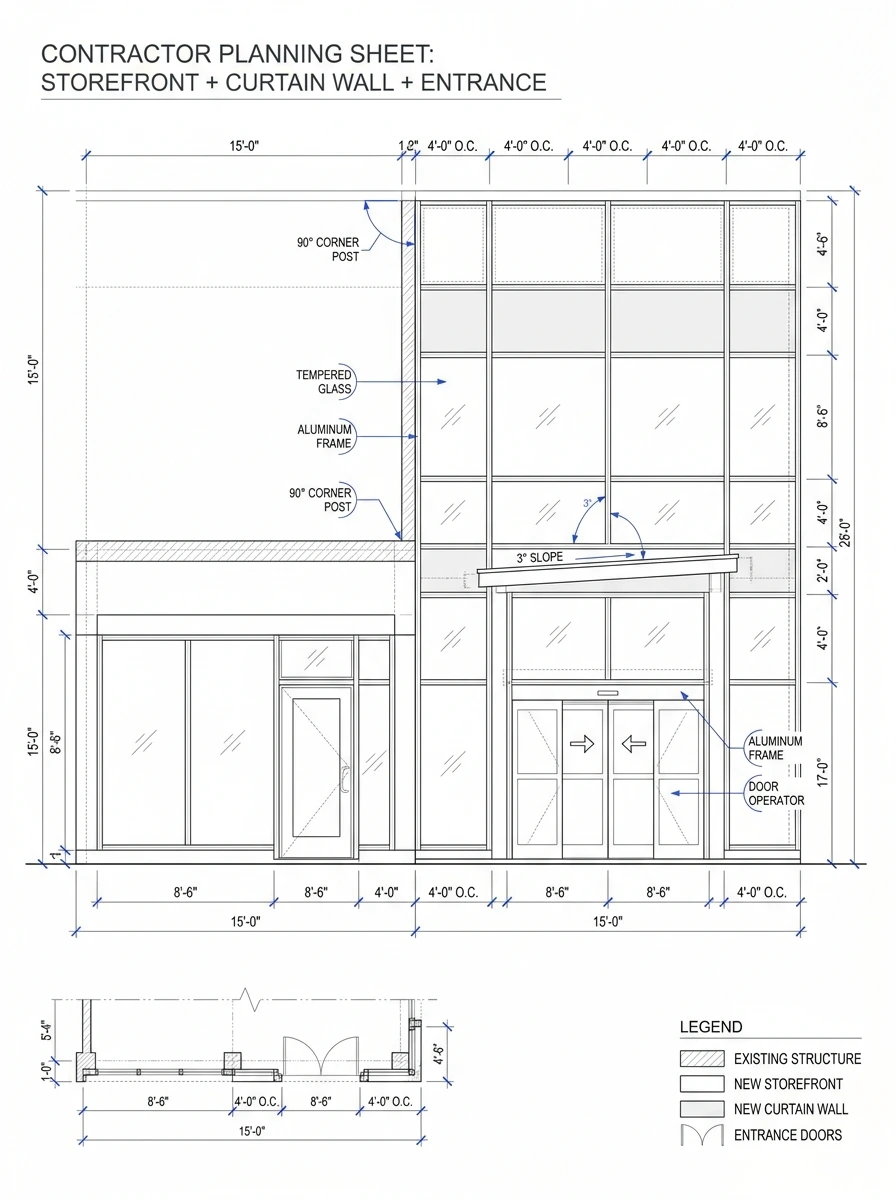
Commercial glazing Sacramento gives GCs and managers a plan for drawings, site checks, glass, frames, doors, delivery, and install work across the 13-city Sacramento metro from our Rancho Cordova base. First, we review plans, walk openings, and flag access, staging, flashing, and trade handoffs before any shop work starts, so your team can set a sound work order and schedule. That said, send plans, elevations, finish notes, photos, project city, and target date; we sort storefront, curtain wall, interior glass, repair, or a mixed scope before pricing and field planning. For example, a blocked lift route can change the drop plan, so we note it early, alert the right trades, and help set a safe site sequence for all teams.
Not sure what fits?
Send the project details and attachments.
Tell us the city, property type, opening, and service you have in mind. A few details make it easier to point you toward the right glass, door, railing, siding, skylight, or custom glass path.
Submittal planning
How do we prepare a commercial glazing package?
We start a commercial glazing package by setting the system, scope line, parts, and handoffs before shop work begins. A glazing submittal is the drawing set and product data that let the project team check the proposed system. It names the glass, frame, hardware, anchors, and finish notes. For example, we match approved plans with the opening, frame depth, sill, and nearby wall work. We measured rough openings twice on recent field checks before the shop cut final sizes. In our experience, the package must also name delivery access, lift needs, staging space, work hours, and who clears each work zone. That said, an approved drawing does not replace a final site check. We log open items early, then confirm the current drawing revision and each RFI before parts ship. In addition, that record lets the shop, GC, and field crew work from the same facts.
Field verification
What must a GC confirm before fabrication?
A GC should confirm the opening, support, finish lines, access, and work order before the shop makes parts. Field verification is the site check that compares real sizes and conditions with approved drawings. We check width, height, plumb, level, frame faces, anchor points, floor height, and the truck route. Specifically, we look for a changed opening, support, or finish line before the shop cuts glass or makes frames. We found that a changed slab edge or wall build-out can alter the install plan. A sill pan is the drain detail below a frame that guides water away from the wall opening. The California Building Code safety-glazing requirements guide glass choices near doors and impact areas. Therefore, we raise a mismatch before release, not when the crew brings finished material. For instance, we compare flashing and finish lines before a frame covers them. That step helps the GC prevent late changes at the wall.
Scope choice
Which commercial glazing scope fits the project?
Choose the page that matches the system driving cost, access, and work order. A new ground-floor entry with frames, fixed glass, doors, and drainage fits commercial storefront glass installation. In contrast, a multi-story exterior system fits curtain wall installation. Interior office or specialty framed work fits glass wall systems. A damaged opening that needs focused work fits commercial glass repair. Use this page when several systems share one schedule, site plan, and approval path. A glazing subcontractor is the trade partner that supplies and installs the glazing scope named in the project contract. We analyzed repeated project questions around that shared point. In fact, a clear scope line stops the team from treating a full package like a single-pane repair. Similarly, shared staging and deliveries need one point of contact. That person groups changes, updates trades, and keeps the install order clear. Scope names help the GC price the right system and send each trade the details it needs.
What to expect
How do we install around an active site?
We plan active-site glazing work around access, weather, tenant use, and the GC's sequence. First, we confirm the opening, base, flashing, and nearby finishes are ready for the system. We then check drop-off time, staging, safe glass travel, lift access, and any entry that must stay open. In addition, we measure final glass pockets and inspect the frame before the crew sets panels. The crew protects finished edges and seals the system in the planned order. For example, a public entrance may need a short access plan while door glass or frame work proceeds. The CPSC architectural-glazing safety standard helps guide the glass review where safety glazing applies. However, clear site notes let the team adjust before glazing work blocks another trade. Specifically, we check who can open gates, move stock, and receive the truck. That plan protects tenant access and keeps crews from moving finished material twice.
Related services
Which commercial glazing path fits your project?
Use the service that names the system or problem driving the work. New storefront frames, glass, doors, and drainage belong with commercial storefront glass installation. Curtain wall work belongs with the multi-story exterior system page, while focused damage belongs with commercial glass repair. Alternatively, use this page when several glazing systems need one project plan, field review, and install sequence. Learn about Capital Glazing and check CSLB #1115205. Capital Glazing serves the 13-city Sacramento metro from Rancho Cordova. Yuliya Dereviaga, Project Manager, reviews this page. Call (916) 720-9009 with drawings, photos, your city, and the target schedule. We will help you name the right scope before a site visit or price request moves ahead. However, do not use a related page when the work needs one shared plan across systems. We can sort that path before the scope reaches the shop.
Reviewed by Yuliya Dereviaga, Project Manager
FAQ
Questions people ask before calling.
Does Capital Glazing work as a glazing subcontractor on commercial projects?
Yes. Capital Glazing works as a glazing subcontractor when the contract names a glass, frame, door, or repair scope. We coordinate submittals, field checks, delivery, and install steps through the GC's process. In addition, we flag drawing questions, access limits, and changed site conditions before the shop makes parts. The project agreement still sets permits, approvals, change orders, and final sign-off. Send the assigned scope and latest drawings so we can plan the right next check. For example, a changed opening or missing detail can affect final sizes and install order.
What should a GC send for a commercial glazing quote?
Send the latest drawings, elevations, door and hardware schedule, glass specs, project city, target dates, and wide site photos. Include the scope line and known access, staging, tenant, or delivery limits. For instance, mark openings that need a field check and share approved submittals or detail sheets. We use those items to name the system, check sizes, and plan the right site review. A full first package gives the team a clearer start than an opening size alone. Clear photos of the full opening also show access and finish limits.
Do commercial glazing projects require safety glass?
Many commercial locations need safety glazing, especially glass in or near doors and other impact areas. The required glass depends on the opening, system, approved details, and code path. However, we check the plans and site condition before we name tempered, laminated, or another specified product. The ADA Standards for Accessible Design can also matter when an entrance change affects the access route. We raise the code question with the GC early so the specified system and site condition stay aligned. In fact, safety labels and approved details should match the glass location.
Can you coordinate work at occupied commercial properties?
Yes. We can plan glazing work around tenant access, business hours, delivery limits, and a safe work area when the scope allows. We need the property contact, access rules, affected openings, and hours when work can proceed. Therefore, tell us which doors, paths, or service areas must stay open and who can clear the area. We use that information to set a work plan instead of asking occupants to solve access during install. Early notice also helps the GC align nearby trades and building staff. For example, a lobby door may need a short closure window and a detour sign.
How do we start a commercial glazing project with Capital Glazing?
Start by sending the project city, plans, elevations, photos, specs, and target schedule. We review the material, flag gaps, and decide if a field check should come before pricing or shop work. Notably, that first review separates a full project package from a storefront, curtain-wall, interior-glass, or repair request. You can also contact our project team with the documents and site limits. We will tell you what we need for the next step. In addition, tell us if the site has set delivery times or lift rules.
Next step
Need glass, storefront, door, railing, siding, skylight, or custom glass work?
Call Capital Glazing or send project details through the quote request form. Include the property city, service type, opening details, and attachments if available.