
Capital Glazing guide
Commercial Window Installation Cost in Sacramento (2026)
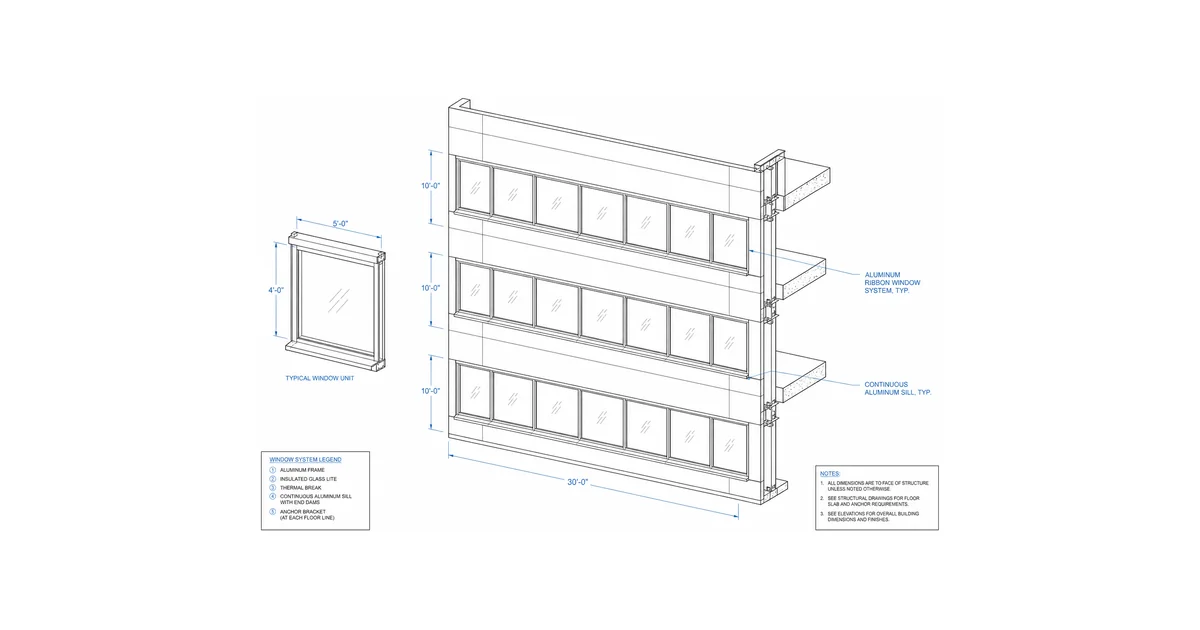
Commercial window installation for Sacramento buildings typically runs $90 to $180 per square foot installed for standard-to-upgraded aluminum-framed systems with Low-E insulated glass (Insight Glass, 2026). Premium curtain wall reaches $200 to $400 per square foot (Hotian Windows, 2026). Commercial window installation cost swings on glass type, framing, and code requirements, so we won’t guess your exact number from a blog post. The honest move is an on-site quote.
That caveat is the whole point. Anyone naming a flat Sacramento “average” before measuring your openings is guessing. Below we break down the variables that move the price, the California codes that decide what glass you can legally install, and when replacement beats new construction.
Key Takeaways
- Installed cost lands around $90–$180 per square foot for aluminum storefront with Low-E IGU; premium curtain wall runs higher.
- Glass type is the biggest lever. Low-E insulated units add roughly $8–$15 per square foot over plain glass.
- Title 24 (2025 code) and CBC Chapter 24 dictate your U-factor, SHGC, and where safety glass is mandatory.
- Ranges are starting points. Only an on-site measurement turns a range into a real number.
Commercial window installation is the supply and fitting of fixed or operable glazed units, usually large glass lites set in aluminum framing, into a commercial building’s wall openings. An insulated glass unit (IGU) is two or more panes sealed around a spacer with an air or argon gap, which slows heat transfer. Low-E is a microscopically thin coating on the glass that reflects heat while letting light through. Those three things, framing, IGU, and coating, decide most of your cost and almost all of your code compliance.
How Much Does Commercial Window Installation Cost Per Window?
A single standard fixed lite, roughly 4 by 6 feet in aluminum framing with tempered safety glass, runs about $800 to $1,500 installed (WellStem, 2026). Oversized or custom units jump to $1,500 to $5,000 each as fabrication and material quantities climb.
Per opening, broader California commercial pricing lands around $400 to $1,200 per window, before factors like upper-floor access or frame removal push it up (Insight Glass, 2025). A full multi-bay storefront commonly totals $5,000 to $15,000 or more (WellStem, 2026).
| Scope | Typical installed range |
|---|---|
| Single standard fixed lite | $800–$1,500 |
| Oversized / custom unit | $1,500–$5,000 |
| Per opening (CA average) | $400–$1,200 |
| Full storefront project | $5,000–$15,000+ |
Numbers are 2026 ranges. Your figure depends on opening size, glass spec, and site access.
What Drives the Price Per Square Foot?
Per square foot, expect roughly $90 to $180 installed for standard-to-upgraded aluminum storefront with Low-E IGU, and $200 to $400 for premium curtain wall (Hotian Windows, 2026). Glass-only IGU material runs about $25 to $80 per square foot before labor (Insight Glass, 2026).
Three factors move the needle most. Labor alone can be 30 to 50 percent of a storefront job, especially on custom work (WellStem, 2026). Glass type is next: Low-E insulated glass costs 25 to 40 percent more than plain glass but cuts energy use (WellStem, 2026). Site complexity, like upper floors, odd shapes, or tight downtown access, rounds it out.
Fixed vs. Operable Windows
Fixed windows do not open. They are cheaper to fabricate and seal more tightly, so most commercial glass is fixed. Operable units add hardware, weatherstripping, and labor, which raises the per-unit price. They also carry a different, often stricter, Title 24 U-factor target, so the spec is not just a comfort choice.
Aluminum Framing
Aluminum dominates roughly 70 to 80 percent of commercial installs for its mix of strength, cost, and design flexibility; steel framing runs about 40 to 60 percent more (WellStem, 2026). For energy code, you want a thermally broken aluminum frame, which inserts an insulating barrier inside the metal to stop heat from short-circuiting straight through.
One field note from our crews: finish choice quietly moves the bill. Clear anodized aluminum tends to price below dark bronze or custom anodized colors, and on a wide elevation that gap adds up before a single pane of glass is ordered.
Replacement vs. New Construction
Replacement reuses the existing rough opening; new construction frames fresh openings as the building goes up. Replacement is usually faster and avoids structural work, but it inherits whatever the old opening allows. New construction gives you a clean shot at sizing, spec, and code from the start, at higher overall cost.
| Path | Best when |
|---|---|
| Replacement | Frame leaks, single-pane, corrosion, or failed code |
| New construction | Ground-up build or full reframe |
| Glass-only swap | Frame is sound; only the lite failed |
If your aluminum frame is straight and weathertight, a glass-only swap can be the smartest spend. We cover that path in our commercial glass repair work, and full systems in our commercial storefront installation services.
Title 24 and CBC Chapter 24: The Code That Sets Your Spec
This is where a Sacramento job differs from a generic quote. Two codes decide what glass you are allowed to install, and they affect price as much as size does.
California’s Title 24, Part 6 energy code governs your window’s thermal performance. The 2025 Energy Code applies to building permits filed on or after January 1, 2026; projects permitted before that date fall under the 2022 cycle (Title 24 Stakeholders, 2025). Sacramento sits in Climate Zone 12, an inland zone where the 2025 cycle tightened vertical fenestration U-factors (Title 24 Stakeholders, 2025). Your product’s U-factor and SHGC must be rated per NFRC and meet the prescriptive values in the nonresidential envelope tables (Table 140.3-B), or pass through whole-building performance modeling. In practice, that means a Low-E IGU in a thermally broken frame, not plain single-pane glass.
The California Building Code, Chapter 24 governs safety glazing. Section 2406.4 names “hazardous locations” where safety glass (tempered or laminated) is mandatory (ICC / CBC 2022). The triggers most commercial windows hit:
| Hazardous location | Key trigger |
|---|---|
| Glazing in doors | All operable/fixed door panels |
| Adjacent to a door | Within a 24-inch arc, bottom edge below 60 in |
| Large window lite | Pane over 9 sq ft, edges below 18 in / above 36 in, walking surface within 36 in |
| Guards and railings | Any glass, regardless of size or height |
| Near wet surfaces | Bottom edge below 60 in of a standing or walking surface |
| Near stairs and ramps | Bottom edge below 60 in of the walking surface |
Because most ground-floor commercial glass sits where people walk, much of it lands in a hazardous location by default. That is why a tempered or laminated spec shows up on the quote, and why two bids can differ: one priced the right safety glass, one did not.
Why a Licensed Glazier Matters
Title 24 and Chapter 24 are enforced at inspection. Get the U-factor, SHGC, or safety-glass spec wrong and the install fails, costing you a re-order and a second mobilization. A licensed glazier prices the compliant glass from the start and pulls the right documentation. Capital Glazing holds CSLB License #1115205 (classifications B, C-17, and C-33), so the code work is built into the bid, not bolted on after a red tag.
A second field note: the most common surprise we find on older Sacramento buildings is a frame that looks fine but has lost its thermal break, or annealed glass sitting in a spot that now reads as hazardous under current code. Neither shows up in a phone estimate. Both show up at the opening.
Frequently Asked Questions
How much does commercial window installation cost in Sacramento?
Plan on roughly $90 to $180 per square foot installed for standard-to-upgraded aluminum systems with Low-E IGU, and more for premium curtain wall (Insight Glass, 2026). Your exact figure needs an on-site measurement.
Is Low-E glass worth the extra cost?
Low-E insulated glass adds about $8 to $15 per square foot but is effectively required to hit Title 24 thermal targets in Climate Zone 12, and it cuts HVAC load over the building’s life (Hotian Windows, 2026).
Do I need tempered or laminated glass?
If the window sits in a hazardous location under CBC Section 2406.4, like in a door, beside a door, or large and near a walking surface, safety glass is mandatory (ICC / CBC 2022). Most ground-floor commercial glass qualifies.
Can I just replace the glass instead of the whole window?
Often yes. If the aluminum frame is straight and weathertight, a glass-only swap can run far below a full system, commonly in the low four figures for a single bay (WellStem, 2026). We assess the frame first.
Why do quotes vary so much?
Glass spec, framing, finish, site access, and code compliance all move the number, and labor alone can be 30 to 50 percent of the job (WellStem, 2026). Compare bids line by line on the same scope.
About Capital Glazing
Capital Glazing is a licensed commercial glass contractor in Rancho Cordova, California, serving the greater Sacramento area. We hold CSLB License #1115205 (classifications B, C-17, and C-33), so Title 24 and CBC Chapter 24 compliance is part of every bid. From single-lite swaps to full storefront and curtain wall systems, we measure your openings, spec code-compliant glass, and quote a real number, not a guess. Learn more about us.
Ready for an accurate figure? Request a quote and we’ll measure your building and walk you through the spec, email info@cglazing.com, or call (916) 720-9009.