
Capital Glazing guide
Commercial Glass Door Replacement Cost in Sacramento (2026)
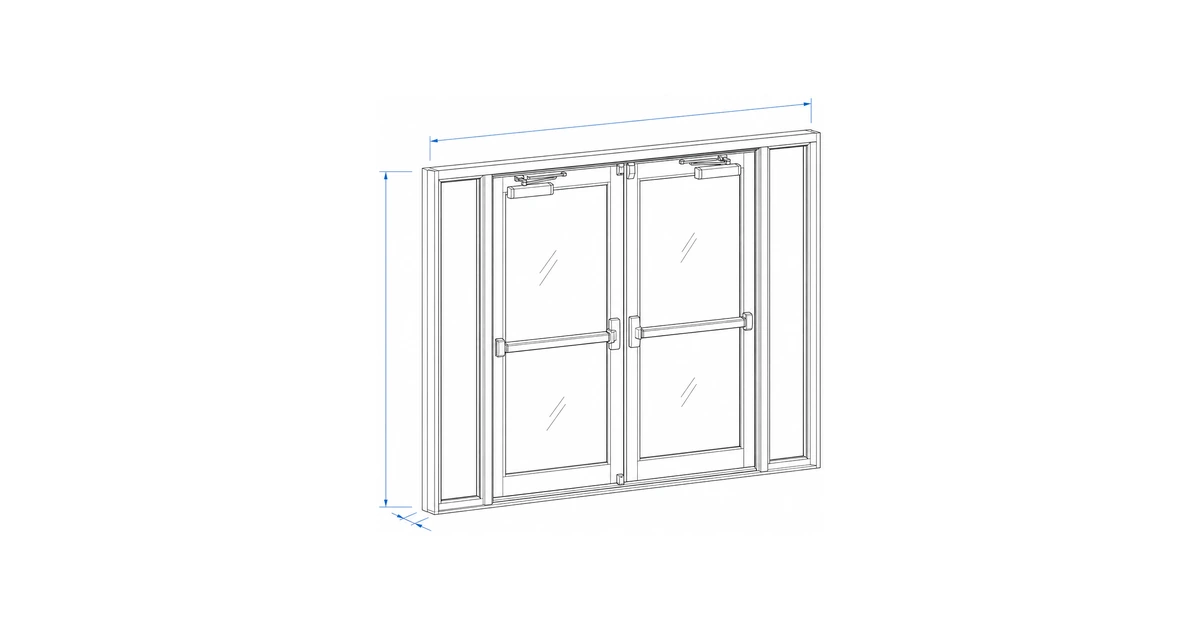
Replacing a single aluminum-framed commercial glass door typically runs about $1,200 to $4,000+ installed, and a double-door entry with panic hardware can reach $6,300 to $17,000. Those are national and California ranges — your real Sacramento number depends on door type, glass, hardware, and the condition of your existing frame. The only way to lock in a fixed price is an on-site quote, which Capital Glazing (CSLB #1115205) provides free across greater Sacramento.
Key Takeaways
- A single aluminum storefront door runs about $1,200–$4,000+ installed; a double-door pair with hardware lands around $6,300–$17,000.
- Replacing only the glass lite is cheaper — a single tempered panel runs roughly $400–$1,500 installed.
- California code requires safety glazing in doors: tempered or laminated glass per CBC Chapter 24, Section 2406.
- Hardware must be ADA-operable with one hand, no tight grasping or twisting, per 2010 ADA Standards Section 309.4.
What is a commercial glass door?
A commercial glass door is a glazed entry door built for business and public use — usually a large glass lite set in an extruded aluminum frame, hung in a storefront system. It carries heavier hardware than a residential door: surface or concealed closers, panic exit devices, deadlocks, and sometimes an automatic operator.
A storefront system is the full aluminum framework — the door, sidelites, transom, and framing — that ties into your building’s facade. When the frame is sound, you can often replace just the door or just the glass.
Safety glazing is glass that resists breaking into sharp shards. In doors, California requires it by law. That means tempered or laminated glass, not ordinary annealed glass.
How much does a commercial glass door cost?
A single aluminum-framed commercial glass door runs roughly $1,200 to $4,000+ installed. A double-door entry with panic hardware and closers can reach $6,300 to $17,000. Specialty fire-rated or high-security doors push higher. Frame condition, glass type, and hardware drive the final figure.
| Door type | Typical installed range | Notes |
|---|---|---|
| Single aluminum storefront door | $1,200–$4,000+ | Hardware and glass type drive the spread |
| Double-door pair (with hardware, closers) | $6,300–$17,000 | Includes panic devices and installation |
| Add: automatic / ADA operator | $1,300–$3,500 per leaf | Low-energy swing operator, installed |
| Specialty (fire-rated, high-security) | $3,000–$8,000+ | Materials plus strict compliance |
Labor is a big slice. Glaziers bill roughly $50–$150 an hour, and per-door installation tends to land in the $500–$1,500 range. A building permit, when required, adds $100–$500. We localize all of this on a Sacramento job during the free quote.
What does it cost to replace just the glass in a commercial door?
If the frame and hardware are fine and only the glass is cracked or fogged, you replace the lite instead of the whole door. A single tempered storefront panel runs about $400 to $1,500 installed. That is far cheaper than a full door swap.
Glass price tracks the glass type. Here is how the common options compare per panel, installed:
| Glass type | Installed cost per panel | Why you’d choose it |
|---|---|---|
| Standard tempered (1/4”) | $400–$1,500 | Code-required safety glass; the baseline |
| Tempered with Low-E coating | $600–$2,000 | Cuts solar heat gain, lowers HVAC load |
| Laminated safety glass | $800–$2,500 | Security, sound control, holds together when broken |
| Insulated glass unit (IGU) | $1,000–$3,000 | Energy performance; double-pane |
Energy-efficient glazing costs 30–60% more than standard tempered, and insulated units run 40–60% more than a single tempered lite. The trade-off is lower cooling bills — a real factor in the Sacramento Valley. If you only need the pane swapped, our commercial glass repair crew can usually keep your existing frame and hardware in place.
What glass and hardware do commercial doors need?
Commercial doors carry safety glazing — tempered or laminated — plus hardware rated for heavy traffic: a closer, a latch or lock, and, on egress doors, a panic exit device. ADA-compliant lever or push hardware is standard. Many entries also add an automatic operator.
Hardware is where budgets swing. A few notes from the field:
- Closers keep the door shutting and latching. On an accessible interior route, total opening force can’t exceed 5 pounds — and that force counts the closer, the latch, and the weatherstrip together.
- Panic / exit devices let people push out in an emergency. On a double door you generally need two coordinated devices. Grade 1 units cost more than the bargain push bars sold online, and they last.
- ADA operators add a push-button or wave-to-open function. A low-energy swing operator installed runs about $1,300–$3,500, including the activation switch.
- Locks and deadlocks must work without tight grasping or twisting per ADA.
Need new doors rather than a glass swap? See our commercial doors options.
California code and ADA: what the law requires
Capital Glazing holds CSLB license #1115205 with B, C-17 (glazing), and C-33 classifications, so every door we hang meets current code. Two rule sets govern a commercial glass door.
Safety glazing. Under California Building Code Chapter 24, Section 2406, glazing in doors is a hazardous location and must be safety glass — tempered or laminated. The same section flags glazing within 24 inches of a door, panes larger than 9 square feet with a bottom edge below 18 inches, and glass near stair landings. Safety glass also has to be permanently marked. Putting ordinary annealed glass in a door is a code violation and a liability risk.
Accessibility. The 2010 ADA Standards, Section 309.4, require door hardware to be operable with one hand, with no tight grasping, pinching, or twisting of the wrist. Round knobs fail; levers, push bars, and U-pulls pass. Activation force tops out at 5 pounds, and hardware mounts between 34 and 48 inches above the floor. For a place of public accommodation, that isn’t optional.
Repair or replace?
Repair when the frame is straight, the hardware works, and the damage is limited to a cracked or fogged lite — a glass-only swap at $400–$1,500 beats a full door. Replace when the frame is bent, the door sags or drags, or the system is too dated to source parts. A failing closer or panic device alone is usually a hardware fix, not a new door.
A broken storefront door also needs to be secured fast. Emergency board-up plus replacement glass typically runs $650 to $2,500+, and after-hours service adds a 30–50% premium. We’ll tell you straight whether a repair holds up or the door has run its course.
FAQ
How long does a commercial glass door replacement take? A glass-only lite swap is often same-day once the panel is cut. A full door or storefront replacement runs a day or more, and if a permit and inspection apply, add roughly one to three weeks to the timeline.
Do I need a permit to replace a commercial door in Sacramento? Larger commercial glass work often requires a building permit and inspection, which adds $100–$500. A like-for-like glass swap usually doesn’t. We confirm the requirement with your jurisdiction before we start.
Is tempered glass required in commercial doors in California? Yes. Glazing in doors is a hazardous location under CBC Chapter 24, Section 2406, so the glass must be tempered or laminated safety glazing and permanently marked.
Can I just replace the glass instead of the whole door? Often, yes. If the aluminum frame and hardware are sound, we replace the lite alone for about $400–$1,500 and keep your existing door.
Why is a double door so much more than a single? Two leaves mean twice the glass, two closers, and coordinated panic hardware, plus an astragal and alignment work — which is why a pair runs $6,300–$17,000 versus a single door’s lower range.
About Capital Glazing
Capital Glazing is a licensed glazing contractor based in Rancho Cordova, serving businesses across greater Sacramento. We hold CSLB license #1115205 with B, C-17, and C-33 classifications. This guide was written and reviewed by our licensed glazing team so the cost ranges, code citations, and hardware guidance reflect what we install on real storefronts every week — learn more about us.
Want a fixed price for your door instead of a national range? Request a quote and we’ll measure on-site, confirm code and ADA requirements, and put a number in writing. Email info@cglazing.com or call (916) 720-9009.