
Capital Glazing guide
Window Condensation in Sacramento: Causes & Fixes (2026)
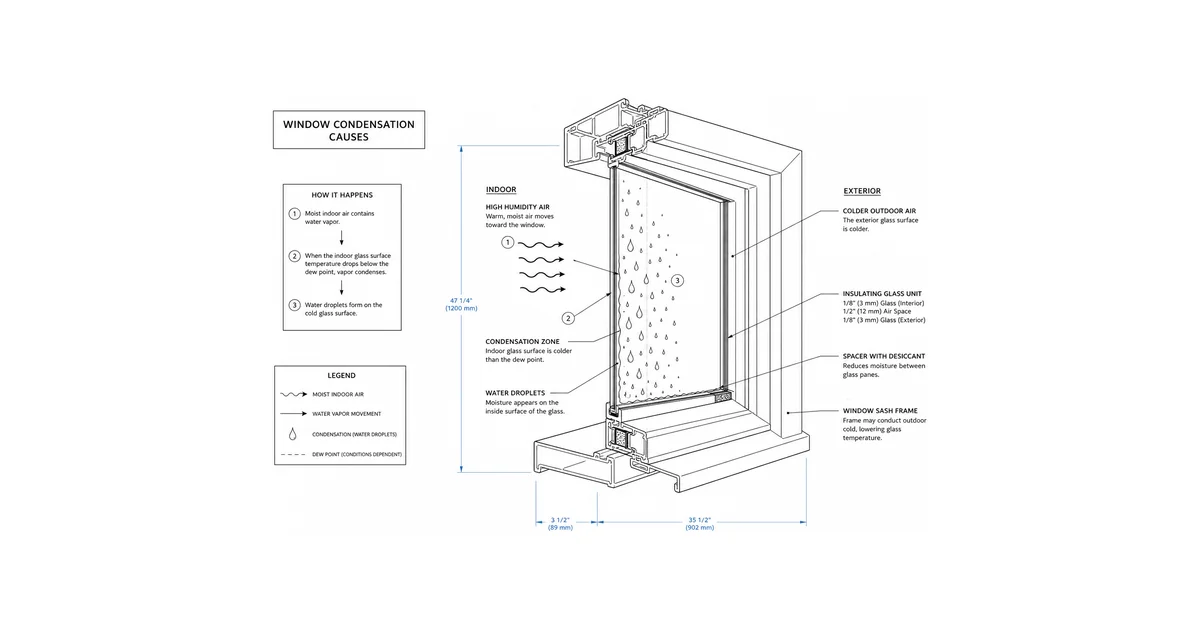
Window condensation comes in three forms, and where the moisture sits tells you everything. Wipe it off the inside of the glass and it’s an indoor humidity issue. See dew on the outside on a cool Sacramento morning and your windows are working as they should. But if the haze is sealed between two panes and won’t wipe off from either side, the insulated glass unit has failed and the glass needs to be replaced (Pella; MI Windows). That last case is the one a glazier handles.
An insulated glass unit (IGU) is the factory-sealed sandwich of two glass panes, a spacer, and an inert gas like argon that does the insulating in a modern window. The dew point is the temperature at which air gets cold enough that water vapor turns to liquid on a surface — the trigger behind every kind of condensation.
Key Takeaways
- Interior fog wipes off and points to high indoor humidity, not a broken window.
- Exterior dew on the outside glass is harmless and usually means your windows are efficient (Dekko Windows).
- Between the panes means a failed seal — you replace the sealed glass unit, you can’t wipe or clean it away.
- Sacramento’s damp, foggy winters push more interior condensation than most California regions (Mover, 2025).
Which type of window condensation do you have?
Run one quick test. Touch the moisture. If your finger smears it on the room side, it’s interior condensation. If it’s on the outside and you can wipe it from there, it’s exterior dew. If you can’t reach it from either side because it’s locked inside the glass, the seal has failed (Glass Solutions).
| Where it sits | What’s causing it | What to do |
|---|---|---|
| Inside surface (room side) | Warm, humid indoor air on cold glass | Lower humidity, add ventilation |
| Outside surface | Outdoor dew on efficient, cool glass | Nothing — it clears as the day warms |
| Sealed between panes | Failed IGU seal, gas leaked out | Replace the glass unit |
Only the last row is a window defect. The first two are about air, not glass.
Why does the inside of my window fog up?
Interior condensation forms when warm, moist indoor air meets a cold glass surface and the surface drops below the dew point. Showers, cooking, laundry, houseplants, and simple breathing all add moisture to the air, and it shows up first on the coldest surface in the room — the window (Andersen).
This is the most common type and the least worrying. It wipes away with a cloth. But left unmanaged, that moisture can pool on the sill, soak into frames and drywall, and feed mold (Pella).
Why newer, tighter windows can fog more
It feels backward, but efficient windows can make interior condensation worse. Older homes leaked air constantly, which carried moisture out. Today’s airtight windows seal that leakage to stop heat loss — and the trapped humidity has nowhere to go (MI Windows). The fix isn’t the window; it’s moving more air through the house.
How to stop interior condensation
The goal is to lower indoor humidity and keep air moving. General guidance puts a comfortable indoor range around 30 to 50 percent relative humidity, and toward the lower end in cold weather; if you see condensation or frost on the glass, your indoor air is too humid for the outdoor temperature (HVAC Base, 2026).
- Run exhaust fans during and after showers and cooking.
- Crack a window for a few minutes a day to exchange air (Pella).
- Open interior doors and move air with ceiling fans.
- Ease off humidifiers, and address aquariums or lots of houseplants in one room.
- In a damp room, a dehumidifier pulls the level back down.
In our Sacramento winters this matters more than people expect. Tule fog can sit over the valley for days, with January humidity averaging in the 80s (Mover, 2025). When the outdoor air is that saturated and homes are buttoned up against the cold, interior glass sweats easily. I’ve walked into valley homes where every north-facing window was dripping, and the fix was a bathroom fan and a cracked window, not new glass.
Is condensation on the outside of my windows bad?
No — it’s usually a good sign. Exterior condensation is dew, the same thing you see on a lawn at sunrise. It forms when the outer pane cools below the outdoor dew point and moisture settles on it. It clears on its own as the sun warms the glass (Glass Rite, 2018).
Here’s why efficient windows show it more. A Low-E coating reflects indoor heat back into the room, so it never warms the outer pane. That outer glass stays close to the outdoor temperature — cold enough on a clear Sacramento morning to drop below the dew point and collect dew (Dekko Windows). In other words, the outside fog is proof your glass is keeping heat where you want it.
There’s nothing to fix. It needs no action and disappears as temperatures rise (MI Windows). If it bothers you, trimming back shrubs that hold cool air against the glass, or letting morning sun reach the window, helps it clear faster.
What does condensation between the panes mean?
It means the seal has failed. When the airtight bond at the edge of an insulated glass unit breaks down, the argon gas leaks out and humid air gets pulled in. That moisture condenses inside the glass cavity, leaving a haze you cannot wipe off from either side (InterNACHI). It is the only one of the three types that signals a broken window.
What wears the seal out is years of thermal stress. Sunlight heats the gas between the panes so it expands and pushes on the seal, then it cools and contracts at night — a cycle glaziers call thermal pumping. Windows on the sunny side swing the hardest and fail first (InterNACHI). Once the seal goes, the insulating gas is gone and the unit no longer performs like a double-pane window should.
| Failed-seal sign | What it tells you |
|---|---|
| Haze that won’t wipe off either side | Moisture is sealed inside the glass |
| Cloudy or milky streaks after cleaning | Trapped humidity drying and re-forming |
| Chalky white deposits on inner glass | Mineral residue from repeated condensation |
You can’t take a sealed unit apart and reseal it — it’s a factory assembly. The real fix is dropping a new IGU into your existing frame, which is far cheaper than a whole new window. We cover the full repair-or-replace breakdown in our foggy double-pane window guide, and the work itself is part of our glass repair service in Rancho Cordova, CA.
When do you need a glazier?
For interior and exterior condensation, you usually don’t — those are ventilation and weather, not glass. Call a glazier when the moisture is sealed between the panes, when a window has chronic interior dripping that’s rotting the frame, or when you want to confirm whether a hazy unit is a seal failure or just surface fog (Evergreen Window).
A licensed glazier measures the failed unit, fabricates a matching sealed IGU, and installs it in your existing sash. If the frame is rotted or the opening is an odd shape, that changes the plan, which is where custom glass comes in. One thing I tell every caller: if one window on a wall has fogged between the panes, check the rest. Units installed together tend to age together, and the neighbors often follow within a season or two.
Frequently asked questions
Can I wipe away condensation between the panes? No. It’s sealed inside the glass cavity where no cloth or cleaner can reach. If wiping both surfaces doesn’t clear the haze, the seal has failed and the glass unit needs replacing.
Is window condensation a sign of mold? Not by itself, but persistent interior condensation can lead to it. Standing moisture on sills and frames gives mold what it needs, which is a real concern during Sacramento’s damp, foggy winter stretches (Pella).
Why is there dew on the outside of my new windows? That’s exterior condensation, and it’s a good sign. Efficient Low-E glass keeps the outer pane cool, so it dips below the dew point and collects dew that clears as the day warms (Glass Rite, 2018).
Does condensation between the panes waste energy? Yes. The fog means the insulating gas has leaked out, so the unit no longer insulates like a sealed double pane. Replacing the glass restores both the clear view and the efficiency (InterNACHI).
What indoor humidity stops window condensation? A range around 30 to 50 percent relative humidity is comfortable, leaning lower in cold weather. If glass keeps fogging, your indoor air is too humid for the outdoor temperature, so ventilate and dial back moisture sources (HVAC Base, 2026).
Get a straight answer on your Sacramento windows
Window condensation isn’t one problem — it’s three, and only one of them means your glass has failed. If the haze is sealed between the panes and won’t wipe away, that’s a broken IGU, and the honest fix is new glass in your existing frame. As a licensed Sacramento-area glazier (CSLB #1115205, classes B, C-17, C-33) in Rancho Cordova, Capital Glazing will tell you which type you have before anyone quotes a repair.
About Capital Glazing
Capital Glazing is a licensed glazier (CSLB #1115205) in Rancho Cordova serving the greater Sacramento region with glass repair, custom glass, and commercial glazing. This guide was written and reviewed by our licensed glazing team using current 2026 sources, with every claim linked to its reference. We diagnose the type of condensation before recommending any work, because two of the three types don’t need new glass at all — learn more about us.
Request a quote and we’ll diagnose it on site, email info@cglazing.com, or call us at (916) 720-9009.