
Capital Glazing guide
Shower Doors in Sacramento: Frameless vs. Framed Cost (2026)
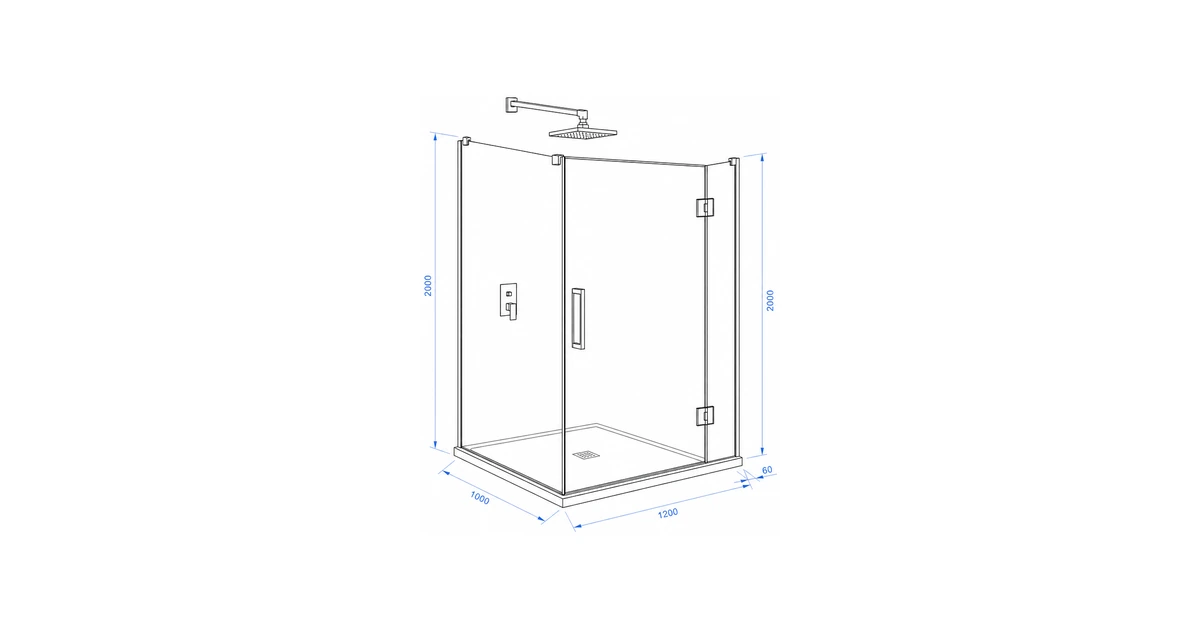
Most homeowners pricing shower doors in 2026 land in a wide band: framed doors run roughly $500–$1,200 installed, while frameless enclosures run about $1,000–$3,000 or more (Angi, 2026). Where your project sits depends on glass thickness, hardware, and how custom the opening is. Those are national and California ranges, not a Sacramento average — the only honest number for your bathroom comes from an on-site measure. Capital Glazing measures here in greater Sacramento and quotes the exact glass and hardware your space needs.
Key Takeaways
- Framed shower doors cost about $500–$1,200 installed; frameless runs $1,000–$3,000+ (Angi, 2026).
- Frameless costs 25–35% more than framed, mostly from thicker custom glass and precision labor.
- California code requires tempered safety glass in showers (CBC Ch. 24, 2025).
- Skip listed averages — book an on-site Capital Glazing quote for a real Sacramento price.
How Much Do Shower Doors Cost in Sacramento?
Plan on roughly $500–$1,200 for a framed door and $1,000–$3,000+ for frameless, installed (Angi, 2026). National shower door installs average around $958, with most projects between $530 and $1,390 (Angi, 2026). Sacramento labor, your opening size, and finish choices push your number up or down from there.
That “average” hides a lot. It blends a cheap framed door on a tub with a luxury custom enclosure in a primary bath. A standard frameless door alone averages about $1,400, with most homeowners spending $1,000–$2,500 (Angi, 2026). Custom shapes — curves, neo-angles — climb higher, sometimes past $3,300.
Shower doors are the glass panels and door that enclose your shower or tub. They range from fully framed to fully frameless. The frame style drives both the look and the price more than almost anything else.
| Door type | Typical installed cost | Best for |
|---|---|---|
| Framed | $500–$1,200 | Budget, tub-shower combos |
| Semi-frameless | $500–$1,550 | Middle ground, clean look |
| Frameless | $1,000–$3,000+ | Open, high-end bathrooms |
| Custom enclosure | $3,300+ | Neo-angle, curved, large spans |
Sources: Angi (2026), Horow (2025).
Frameless vs. Framed: What’s the Real Price Difference?
Framed glass showers typically cost 25–35% less than frameless (Horow, 2025). A basic framed setup can install for as little as the low hundreds. A comparable frameless layout often runs $1,200 more. The gap comes from labor, not just glass.
Why? Frameless doors carry their own weight without a metal frame. They need precise alignment, solid wall prep, and careful hardware placement to stay watertight. That precision takes time. Heavier, thicker custom glass adds material cost on top.
A frameless shower door is a panel with no surrounding metal frame, held by hinges and clips mounted to the wall. A framed shower door has a full aluminum frame around every glass edge, which lets it use thinner, cheaper glass. A semi-frameless shower door splits the difference — a frame where glass meets tile, but a clean, frameless door edge.
Semi-frameless lands in the middle on price, roughly $500–$1,550 installed, averaging around $1,225 (Horow, 2025). It gives you most of the open look for less money. For many Sacramento bathrooms, it’s the practical pick.
Frameless Shower Door Cost Breakdown
A frameless door’s price is the sum of its parts: glass, hardware, and labor. Frameless glass runs about $35–$70 per square foot, and labor runs $50–$100 per hour (Angi, 2026). Those two lines make up most of the bill.
Hardware adds up fast on frameless work. Hinges run around $80 each, and tracks run $135–$380 (Angi, 2026). Finish matters too. Matte black and brushed gold cost more than standard chrome. Permits, delivery, and old-door disposal add another $150–$200 (Angi, 2026).
Here’s where the frameless premium really lives, per industry data: the upcharge over framed is typically 25–35%, driven by thicker custom glass and the precision labor needed for a frame-free, watertight fit (Glass Shower Direct, 2025).
| Frameless cost driver | Typical figure |
|---|---|
| Glass | $35–$70 per sq ft |
| Labor | $50–$100 per hour |
| Hinges | ~$80 each |
| Tracks | $135–$380 |
| Permit + delivery + disposal | $150–$200 |
Source: Angi (2026).
Does Glass Thickness Change the Price?
Yes — thickness is a real cost lever on frameless doors. The two standard options are 3/8” (10mm) and 1/2” (12mm), and 3/8” is the industry minimum for frameless (Glass.com, 2025). Thicker glass costs more and weighs more, which can also mean heavier hardware.
About 9 out of 10 frameless doors installers set use 3/8” glass (All Nite Glass, 2025). It’s the value sweet spot for standard enclosures up to about 60 inches wide. It feels solid, supports its own weight, and fits most hardware ratings.
When does 1/2” earn its keep? Large or custom spans, or when you want that heavier, more substantial swing and “thunk” on close. It costs more and weighs noticeably more. A 30x72-inch panel weighs about 37 lbs in 3/8” versus 49 lbs in 1/2” (Glass.com, 2025). A common money-saver: 1/2” fixed panels paired with a lighter 3/8” door.
| Glass option | Feel | Typical use |
|---|---|---|
| 3/8” (10mm) | Solid, standard | Most frameless showers |
| 1/2” (12mm) | Heavier, premium | Large or custom enclosures |
| Mixed (1/2” + 3/8”) | Balanced | Big fixed panel, lighter door |
Source: Glass.com (2025).
Are Easy-Clean Coatings Worth the Upcharge?
A protective coating repels water spots and soap scum, so the glass stays clear with less scrubbing. On average, coating adds about 30% to the door cost — roughly $500 more on a coated door versus an uncoated one (Angi, 2025). Whether that’s worth it depends on your water and your patience.
Sacramento water leaves spots. A factory-applied or pro-applied coating buys you years of easier cleaning. ShowerGuard fuses protection at manufacturing and sits at the top of the price range. EnduroShield is more budget-friendly with a 10-year warranty (Angi, 2025).
DIY sprays exist, but they fade. A $17 bottle of off-the-shelf repellent needs reapplying every few weeks (Angi, 2025). If you want set-and-forget, a professional coating on new glass is the better long-game spend. We’ll walk you through the options when we measure.
California Code: Why Shower Glass Must Be Tempered
Every pane in or around a shower must be safety glazing — that’s not optional in California. Under the California Building Code, Chapter 24, Section 2406, glazing in tub and shower enclosures is a “hazardous location” and must use safety glazing (CBC Ch. 24, 2025). Tempered glass meets that standard.
Tempered glass is heat-treated so it’s far stronger than ordinary glass, and if it breaks, it crumbles into small, dull pieces instead of sharp shards. Code requires it to pass an impact test and carry a permanent label (CBC Ch. 24, 2025). That stamp in the corner of your glass is the proof.
This is the case for hiring a licensed glazier, not grabbing a big-box kit. A licensed contractor sources code-compliant tempered glass, sets it to spec, and stands behind the install. Capital Glazing holds CSLB license #1115205 (classifications B, C-17, and C-33). Our team handles custom cuts and code-right glazing daily. Local code editions and amendments vary by jurisdiction, so a licensed pro confirms what your inspector expects.
Frequently Asked Questions
How much do frameless shower doors cost in Sacramento?
Frameless shower doors typically run $1,000–$3,000+ installed nationally, averaging about $1,400 (Angi, 2026). Custom shapes cost more. Your Sacramento price depends on size, glass thickness, and hardware, so an on-site quote is the only accurate figure.
Are frameless shower doors worth the extra cost?
For an open, high-end look with no metal frame to clean, many homeowners say yes. Frameless costs 25–35% more than framed (Horow, 2025). If budget is tight, semi-frameless gives most of the look for less.
What thickness of glass is best for a frameless shower door?
For most showers, 3/8” (10mm) is the standard and best value — about 9 in 10 installs use it (All Nite Glass, 2025). Choose 1/2” for large or custom enclosures, or for a heavier, premium feel.
Is tempered glass required for shower doors in California?
Yes. California Building Code Chapter 24, Section 2406, classifies shower and tub glazing as a hazardous location requiring safety glazing (CBC Ch. 24, 2025). Tempered glass meets this, must pass an impact test, and carries a permanent label.
How long does shower door installation take?
A standard framed or semi-frameless door is often a half-day job. Custom frameless enclosures usually take longer because the glass is measured, ordered, then fitted on a return visit. We confirm timing when we measure your space. Want a date? Request a quote.
About Capital Glazing
This article was written and reviewed by the licensed glazing team at Capital Glazing, a Rancho Cordova glazier serving greater Sacramento. We hold CSLB license #1115205 with B, C-17, and C-33 classifications. Day in and day out, we fabricate and install custom glass and shower enclosures cut to code-compliant tempered spec.
Need glass cut, a mirror, or a full enclosure? Our glass and mirror shop in Rancho Cordova handles custom orders, and you can learn more about us and our work. We don’t quote shower doors from a chart — we measure your bathroom and price the exact glass and hardware it needs.
Ready for a real number? Request a quote, email info@cglazing.com, or call Capital Glazing at (916) 720-9009.