
Capital Glazing guide
How to Choose a Glazier in Sacramento (2026)
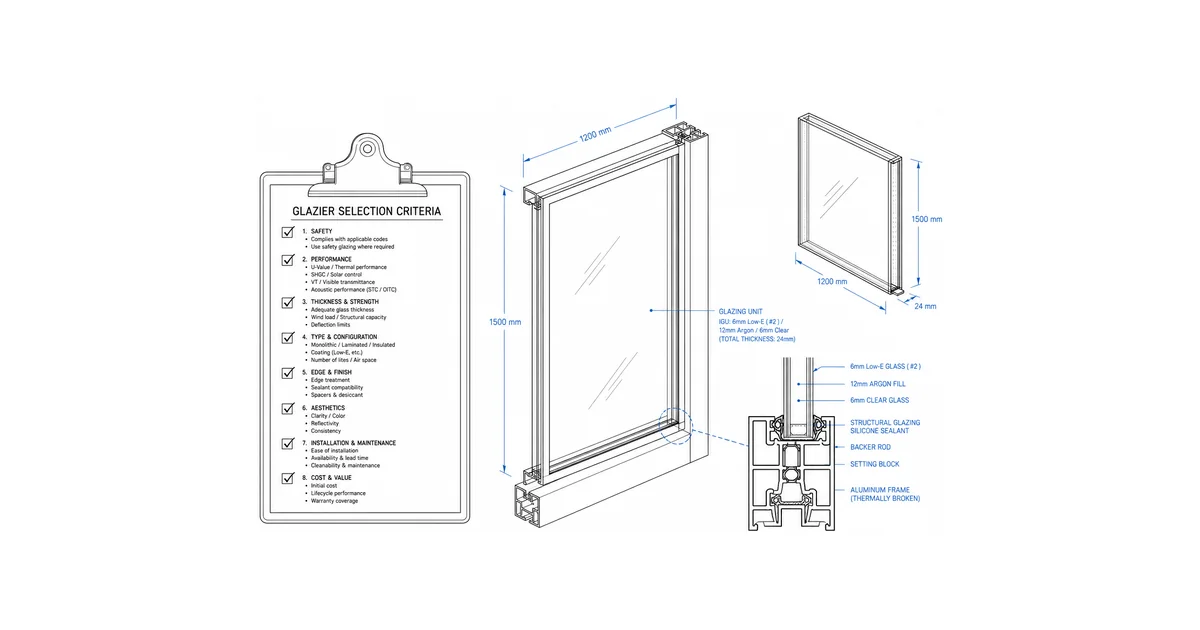
The fastest way to choose a glazier in Sacramento is to verify their license before anything else. Look up the company on the California Contractors State License Board site (cslb.ca.gov), confirm the license is current and active, and check that it carries the right classification for glass work. That one free step, done in two minutes, screens out most of the operators you do not want in your home or storefront.
Everything after that, the quotes, the references, the warranty, matters too. But license first.
Key Takeaways
- Verify the CSLB license at cslb.ca.gov before you sign or pay anything. It is free and takes minutes.
- Confirm the license is “current active” and carries a glazing classification such as C-17, plus the right scope for your job.
- Get a written, itemized quote and insist someone measures on site, not over the phone.
- Treat cash-only deals, no license, and lowball phone quotes as red flags.
Start with the license: how to verify a glazier on cslb.ca.gov
Before you compare prices, confirm the contractor is legal. California requires a license for most glazing work, and the Contractors State License Board keeps a free public lookup. This is the single most useful thing a homeowner or property manager can do before hiring.
A CSLB license is the credential the Contractors State License Board issues to contractors who pass trade, law, and business exams and meet bonding and insurance rules. It is your proof that the person quoting your job is who they say they are.
Here is the lookup, step by step:
- Go to cslb.ca.gov and open the “Check a License” tool.
- Search by license number, business name, or personal name. If a name search fails, try the last name first (for “Smith Glass,” type “Smith”).
- Confirm the status reads “current active.” Inactive, suspended, revoked, or expired all mean do not hire.
- Check the classifications listed and the bond and insurance details on the record.
- Make sure the business name on the record matches the company quoting you. Some unlicensed operators borrow real license numbers that belong to someone else.
If anything looks off, you can call the CSLB at (800) 321-2752 to confirm details that are not shown online (cslb.ca.gov).
Which classification should a glazier hold?
Look for the C-17 Glazing Contractor classification. Per the CSLB, a C-17 glazing contractor “selects, cuts, assembles and/or installs all makes and kinds of glass, glass work, and mirrored glass,” and fabricates and installs frames, panels, sashes, and doors (cslb.ca.gov).
For larger or mixed jobs, a contractor may also carry a B (General Building) or other specialty classes. Capital Glazing, for example, holds CSLB #1115205 with B, C-17, and C-33. What matters is that the license covers the scope of your job. A mismatch, a glazing-only license quoting a full building project, is worth a question before you commit.
Questions to ask a glazier before you hire
Once the license checks out, work through a short list of questions. Good contractors answer these without hesitation. Vague or annoyed answers tell you something too.
| Ask this | What a solid answer sounds like |
|---|---|
| What is your CSLB license number? | A number you can verify, given freely. |
| Are you bonded and insured? | Yes, with proof on request. |
| Who measures the opening? | A person, on site. |
| Is the quote itemized? | Yes, in writing. |
| Does this glass meet safety-glazing code? | A clear yes with the why. |
| What is the warranty? | Stated in writing, parts and labor. |
| Can I see recent local references? | Yes, names and projects nearby. |
Proof of insurance and bond
Every licensed California contractor must carry a $25,000 surety bond, which protects you if the contractor abandons the job or breaks the contract. The bond shows on the CSLB record. Ask separately for proof of liability insurance, and do not assume the bond covers your whole project, it does not. Workers’ compensation rules are also tightening; California is phasing toward requiring it for all licensed contractors, with the universal mandate now set for January 2028 (Press Democrat).
Get a written, itemized quote
A real quote lists the glass type, the frame or hardware, labor, removal and disposal, and the timeline, line by line. A single lump-sum number scribbled on the spot is not a quote, it is a guess. Itemized pricing lets you compare bids honestly and catch what one contractor left out that another included.
Who measures: on site beats over the phone
This is the one I push hardest with clients. A glass opening is never as square as it looks, old frames sag, storefronts settle, and a quarter inch off means a re-order. A glazier who quotes a custom piece purely from a phone description is gambling with your schedule. Someone should come out, measure, and look at how the glass meets the frame. In my experience, the jobs that go sideways almost always trace back to a measurement nobody verified in person.
Code and safety knowledge separate pros from amateurs
A good glazier knows where code requires safety glazing and will tell you before you ask. Safety glazing is glass that is less dangerous when it breaks, usually tempered or laminated, and building code requires it in specific hazardous locations.
Under the International Residential Code (R308.4), those hazardous locations include glass in doors, glass in panels next to a door where the bottom edge sits below 60 inches and within 24 inches of the door, and glass near tubs, showers, pools, and spas below 60 inches (Routt County / IRC R308). Tempered panes carry a permanent etched designation in the corner.
Section numbers and exceptions shift between code editions and local Sacramento-area amendments, so a contractor who says “let me confirm with the building department” is being honest, not unsure. One who waves it off may cut corners that fail an inspection or, worse, hurt someone.
References and a real warranty
Ask for a few recent local references and actually call one or two. People are usually happy to tell you whether the crew showed up on time and cleaned up. Then get the warranty in writing, and read what it covers. Glass, seals, and labor are often warranted separately, and “lifetime” means little if it is not on paper.
Red flags vs. green flags
Patterns matter more than any single answer. Here is the short version.
| Red flags | Green flags |
|---|---|
| No license or won’t share the number | Verified current-active CSLB license |
| Cash only, large deposit up front | Normal payment terms, modest deposit |
| Lowball quote over the phone | On-site measure before quoting |
| No written quote | Itemized written quote |
| Dodges code or insurance questions | Explains safety glazing and shows proof |
| No references | Recent local references on request |
A lowball phone quote is the classic trap. The number sounds great until the measure is wrong, the change order arrives, and the final bill passes the honest bids you turned down.
Frequently asked questions
How do I check if a glazier is licensed in California?
Go to cslb.ca.gov, open “Check a License,” and search by license number or business name. Confirm the status is “current active” and that the classification fits your job. The check is free and takes a couple of minutes.
What license does a glazier need in Sacramento?
Look for the CSLB C-17 Glazing Contractor classification. Larger or mixed projects may also call for a B (General Building) classification. The license should cover the actual scope of your work.
Is it normal for a glazier to ask for a deposit?
A modest deposit for custom-ordered glass is normal, since the material is made to your measurements. Be cautious if a contractor demands a large up-front payment or insists on cash only.
Why does on-site measuring matter so much?
Glass is cut to exact dimensions, and openings are rarely perfectly square. An in-person measure catches frame issues a phone quote misses, which prevents re-orders, delays, and surprise costs.
What if a glazier won’t give a written quote?
Walk away. A written, itemized quote is standard practice and protects both sides. No paper means no accountability and no honest way to compare bids.
About Capital Glazing
Capital Glazing is a licensed glazing contractor in Rancho Cordova serving the greater Sacramento area, CSLB #1115205 (B, C-17, C-33). We handle residential and commercial glass, from a single broken pane to full storefront systems, and we measure on site before we quote. You can learn more about us, see our glass repair service or commercial storefront installation, and when you are ready, request a quote, email info@cglazing.com, or call (916) 720-9009.