
Capital Glazing guide
Glass vs. Cable Railing in Sacramento (2026)
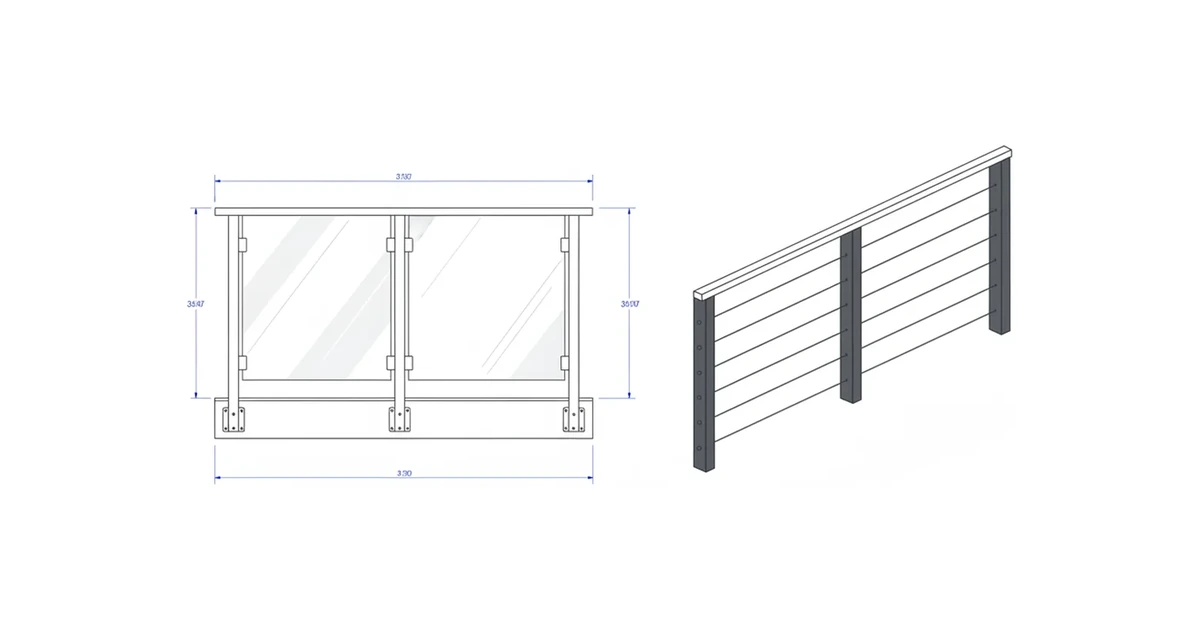
For most Sacramento decks, the glass vs cable railing choice comes down to a simple trade: cable costs less and is easier to live with, while glass blocks wind and gives the cleaner, gap-free view. Cable lands around $150 to $250 per linear foot installed; glass runs roughly $200 to $450 and climbs past $600 for custom interior or wind-rated panels (Angi via search, 2025; Senmit, 2025). Both numbers shift with your posts, span, and access, so we measure on site before we quote rather than guess a flat average.
That gap is real, but it is not the whole story. Both systems are code-governed guards, not décor, and the right pick depends on your view, your climate, and where the railing goes. Below we break down cost, upkeep, wind, the California code each must satisfy, and what an inland Sacramento site changes.
Key Takeaways
- Installed cost: cable ~$150–$250/ft, glass ~$200–$450/ft (custom glass to $600+) (Senmit, 2025).
- Glass blocks wind and blowing debris; cable lets air through and runs cooler (Senmit, 2025).
- Cable is the low-maintenance choice; glass shows fingerprints and spots and often needs weekly cleaning in season (Senmit, 2025).
- Both are guards under California code: 42-inch height, a 4-inch sphere limit (CBC §1015), and laminated glass over walking surfaces (CBC §2407).
Glass Railing vs. Cable Railing: The Short Answer
A glass railing is a guard built from tempered or laminated glass panels held by posts, clamps, standoffs, or a recessed base shoe. It gives a window-like, gap-free view and acts as a solid wind barrier. A cable railing uses thin horizontal stainless steel cables strung under tension between posts, with a top rail. The cables visually recede, so you mostly notice the posts and rail (Senmit, 2025).
The view difference is the part people feel first. Glass is unbeatable when it is clean. Cable trades a faint line of cables for airflow, a cooler deck, and far less cleaning. Cost and climate usually break the tie.
What Does Each Railing Cost Per Foot?
Cable railing typically runs about $150 to $250 per linear foot installed, and glass about $200 to $450, with custom interior or tall glass climbing toward $600 and up (Angi via search, 2025; Senmit, 2025). Glass is the premium pick on price; cable is the budget-friendlier modern look.
The drivers are the same for both: post material, total length, corner count, height, and site access. One caveat matters here. An all-stainless cable system with steel posts and rails can match or pass some glass systems, so cable is not automatically cheap (Senmit, 2025).
| Railing | Installed cost (per linear foot) | Best for |
|---|---|---|
| Cable | $150–$250 | Budget, views with airflow, wide spans |
| Glass | $200–$450 ($600+ custom) | Wind blocking, gap-free view, pet and toddler safety |
Sources: Angi and Senmit, 2025. Treat these as national ranges. A real Sacramento number comes from a measured quote, not a blog post. Request one here.
A 40-Foot Deck, Side by Side
On a 40-foot deck, the spread shows up fast. At about $150 per foot, a cable run lands near $6,000; glass at about $300 per foot lands near $12,000 (Senmit, 2025). That roughly 2x gap is why budget often points to cable, while a view-first remodel justifies glass. Both figures move with posts, height, and access.
Which Railing Needs Less Maintenance?
Cable needs less day-to-day upkeep. Plan to wash it with mild soap once or twice a year and check the cable tension annually (Senmit, 2025). Glass behaves like a row of giant windows: it shows fingerprints, water spots, pollen, and bird droppings quickly, and exterior panels often need cleaning weekly during active seasons, on both sides.
Sacramento’s spring pollen and Valley dust make that a fair thing to weigh. If you love the look of spotless glass and will keep it clean, great. If you want to set it and forget it, cable is the easier system to live with.
| Factor | Glass | Cable |
|---|---|---|
| Cleaning | Frequent, both sides | Wash 1–2x/year |
| Wind | Blocks wind and debris | Lets air through |
| View | Gap-free, window-like | Thin lines recede |
| Upfront cost | Higher | Lower |
| Durability | 10–15+ yrs; chips force panel swap | 15–20+ yrs; runs cheap to replace |
Source: Senmit, 2025.
Wind, Privacy, and Comfort
Glass is the better wind barrier. It stops breezes and blowing debris, which is why it shines on exposed sites; the trade-off is a “greenhouse” effect that can make a deck hotter. Cable lets air pass, keeping the deck cooler and making small spaces feel more open (Senmit, 2025).
For barriers, glass is a solid, gapless wall that many parents and pet owners prefer. Cable has roughly 3 to 4 inch openings, and horizontal runs can create a climbable “ladder” effect, so vertical cable is sometimes chosen around young children (Senmit, 2025).
Do Both Have to Meet California Code?
Yes. Both are guards, so both must be at least 42 inches high and built so a 4-inch sphere cannot pass through any opening from the walking surface to the required height. Residential stair guards can drop to 34 inches (CBC §1015). Guards are required wherever a walking surface sits more than 30 inches above the grade below.
Here is where the two systems diverge under code:
- Glass over a walking surface must be laminated glass made of fully tempered or heat-strengthened glass, minimum 1/4 inch, meeting CPSC 16 CFR Part 1201 Category II or ANSI Z97.1 Class A (CBC §2407). Single tempered glass is only allowed where nothing can be walked on below.
- Structural glass balusters need an attached top rail unless the laminated panels are tested to ASTM E2353 to stay in place if a baluster fails (CBC §2407).
- Cable must hold its tension so the 4-inch sphere rule keeps passing for the life of the railing, which is why post spacing and intermediate supports get engineered, not eyeballed.
- Both must resist a top-rail load (a 50 lb/ft linear load shows up in the glazing provisions; the primary guard load reference is Section 1607.9) (CBC §2403/2406).
Guardrails require structural calculations and usually a permit, and your jurisdiction can add requirements. Capital Glazing holds CSLB #1115205 (classes B, C-17, C-33) and builds both systems to current CBC.
Why a Licensed Glazier Matters Here
The price of either railing is mostly engineering and code, not just the parts. A licensed glazier sizes the glass for load and height, specifies laminated safety glazing and labels it, runs the structural calc, and pulls the permit so the guard passes inspection. With cable, the same license covers post sizing, tension hardware, and spacing so the 4-inch rule holds. A guard that fails a load test or an inspection is not a finished guard. It is a redo, plus liability.
In the field, the surprise on cable jobs is almost always corrosion in tight spots, not the cables snapping. We watch threaded fittings and washers, where the protective film can break down in crevices that trap moisture. On glass, the recurring lesson is final height: set a top rail to 42 inches off the subdeck, then add a thick paver or topping layer, and the finished guard can come up short. We measure to the finished surface, not the framing.
Sacramento Is Inland, So Match Stainless to the Exposure
Greater Sacramento sites do not face the same saltwater exposure as beachfront projects, but grade selection still depends on the actual site. Type 316 contains molybdenum that improves chloride resistance; the International Molybdenum Association recommends considering it within five to ten miles of a large saltwater body or where deicing salts, industrial pollution, or urban pollution raise the exposure (IMOA).
For cable and glass hardware, a measured quote should match the alloy and finish to moisture, salts, pollution, and maintenance conditions instead of treating inland location alone as a reason to downgrade the stainless grade.
Frequently Asked Questions
Is glass or cable railing cheaper? Cable is usually cheaper. Cable runs about $150 to $250 per linear foot installed; glass runs about $200 to $450 and can top $600 for custom or wind-rated panels (Angi, Senmit, 2025). An all-stainless cable system can close that gap, so a measured quote is the only way to be sure.
Which railing is better for a windy or exposed deck? Glass. It blocks wind and blowing debris, which is why it suits exposed balconies and upper decks (Senmit, 2025). Cable lets air through, so it keeps a deck cooler and feels more open, but it will not shield you from wind.
Which needs less maintenance, glass or cable? Cable. Wash it once or twice a year and check tension annually. Glass shows fingerprints, water spots, and pollen fast and often needs cleaning weekly in active seasons, on both sides (Senmit, 2025).
Are both safe for kids and pets? Glass is a solid, gapless barrier that many parents and pet owners prefer. Cable has roughly 3 to 4 inch openings, and horizontal runs can be climbable, so vertical cable is sometimes used around young children (Senmit, 2025).
Do I need a permit for a deck railing in Sacramento? Usually yes. Guards over a 30-inch drop require structural calculations and typically a permit, with local rules on top (CBC §1015). A licensed contractor handles the calc, the permit, and code-compliant materials.
About Capital Glazing
Capital Glazing is a licensed glazier (CSLB #1115205, classes B, C-17, C-33) in Rancho Cordova, serving the greater Sacramento region with glass railings, custom glass, commercial storefront glazing, and glass repair. This guide was written and reviewed by our licensed glazing team against the current California Building Code and 2025–2026 cost data, and every figure links to its source. We publish ranges rather than one Sacramento average on purpose: an accurate number comes from measuring your deck, balcony, or stairs. Learn more about us.
Ready to compare options for your space? Request a quote and we will spec the right system, email info@cglazing.com, or call Capital Glazing at (916) 720-9009.