
Capital Glazing guide
Glass Pool Fencing in Sacramento: Cost & Code (2026)
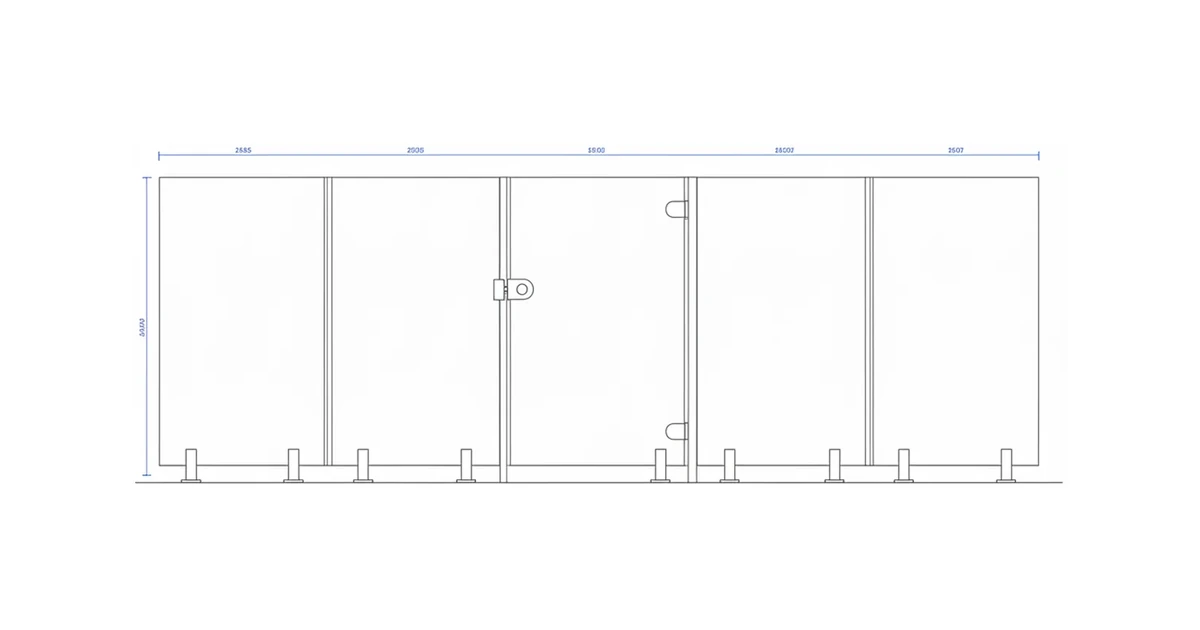
A glass pool fence costs about $120 to $500 per linear foot installed, or roughly $12,000 to $50,000 to surround an average inground pool (HomeGuide, 2026). Where you land depends on the system: framed runs lowest, frameless highest. But cost is only half the job. In California a pool fence is a legal safety barrier, so the height, the gaps, and the gate are all set by code — not by taste. We measure on site and confirm the code path before we quote, rather than guess a flat Sacramento average.
That order matters. A glass pool fence that looks perfect but fails the barrier inspection is not finished — it is a redo and a liability. Below we break down what each system costs, what the California Swimming Pool Safety Act requires, and the questions Sacramento pool owners ask most.
Key Takeaways
- Installed cost is about $120–$500 per linear foot; framed is the budget end, frameless the premium (HomeGuide, 2026).
- California pool barriers must be at least 60 inches tall, block a 4-inch sphere, and leave no more than a 2-inch gap at the bottom (CA Swimming Pool Safety Act, 2025).
- Gates must be self-closing and self-latching, open away from the pool, with the latch no lower than 60 inches (CA H&S Code §115923, 2025).
- Glass panels are tempered (toughened) safety glass, commonly 10–12 mm thick, held by spigots or standoffs (Glass House AU, 2025).
What Does a Glass Pool Fence Cost Per Foot?
A glass pool fence costs about $120 to $500 per linear foot installed, and the system type sets where you land (HomeGuide, 2026). For a typical 60–80 foot pool perimeter, that puts most projects in the low tens of thousands. Framed panels are the budget choice. Frameless is the premium look and price. Semi-frameless sits in between.
The number moves with panel height, glass thickness, the substrate you mount into, and local labor (HomeGuide, 2026). One style breakdown puts framed at roughly $95–$130 per foot, semi-frameless around $115–$175, and frameless near $150–$210 (AG Fencing, 2024). Premium frameless base-shoe systems can run higher. The self-closing gate is usually a separate line item.
| System | Typical installed cost (per linear foot) | Look |
|---|---|---|
| Framed (budget) | $95–$130 | Glass inside a metal frame; most traditional |
| Semi-frameless (mid) | $115–$175 | Posts between panels, no top or bottom rail |
| Frameless (premium) | $150–$210+ | Spigots or standoffs only; seamless view |
Sources: HomeGuide and AG Fencing, 2024–2026. Treat these as national ranges. A real Sacramento number comes from a measured quote, not a blog post — request one here.
Frameless vs. Semi-Frameless: Which Is Right?
A frameless glass pool fence holds each panel with discreet spigots or standoffs and no posts or rails, so the barrier nearly disappears and the view of the pool stays open (Omega Underground, 2025). It uses thicker glass — usually 12 mm — and precise mounting, which is why it sits at the premium end of the price range. It is our most-requested system when the pool is the centerpiece of the yard.
A semi-frameless glass pool fence keeps slim metal posts between the panels but skips the top and bottom rail. You still get a clean, modern look, and the posts let you use thinner glass, which trims the most expensive part of the job (AG Fencing, 2024). It is a strong middle ground for a budget that still wants the glass aesthetic.
The trade-off is straightforward. Frameless buys the cleanest sightline at the highest price. Semi-frameless gives up a little visibility for real savings. Either way, the barrier still has to clear the same California code — the system you pick changes the look and cost, not the safety rules.
How Is the Glass Mounted? Spigots and Standoffs
Frameless panels are tempered safety glass — toughened, and several times stronger than ordinary window glass — typically 10 to 12 mm thick, with 15 mm used in high-wind exposures (Glass House AU, 2025). The panels are carried by spigots (also called standoffs or point fixings), small marine-grade stainless fittings that clamp the glass at a few points so it appears to float (DIY Frameless Glass, 2025).
How the spigot meets the deck matters for both strength and finish. Core-drilled spigots set into a hole bored into the concrete and grouted in place are the premium, strongest method; base-plate (surface-mount) spigots bolt on top of the slab and install faster, and they are the practical choice on timber decking (DIY Glass Australia, 2025). Spigot spacing is engineered to the glass thickness and panel width, not eyeballed.
A field note: the substrate decides the install, not the brochure. On a tile-over-slab patio we core-drill where the concrete allows it and surface-mount where it does not — and we confirm what is under the finish before the glass is ever cut.
What Does California Code Require for a Pool Fence?
California’s pool barrier rules come from the Swimming Pool Safety Act (Health & Safety Code §§115922–115923), which is built into the California Building Code and Residential Code. When a permit is issued for a new or remodeled pool at a single-family home, the pool must have at least two of seven drowning-prevention features — and a compliant enclosure is the first and most common one (CA Swimming Pool Safety Act, 2025).
A glass pool fence used as that enclosure has to meet every one of these:
| Code requirement | What it means for the fence |
|---|---|
| Minimum height 60 inches | Panels stand at least 60 in. above grade |
| Bottom gap max 2 inches | No more than 2 in. from grade to the panel bottom |
| 4-inch sphere rule | No gap may pass a 4-in. sphere |
| Gate self-closing | Latches shut on its own from any open position |
| Gate self-latching | Latch no lower than 60 in.; gate swings away from pool |
| No climbable features | No handholds or footholds a young child could climb |
Source: California Swimming Pool Safety Act, H&S §115923, 2025. This is the rule set that separates a compliant barrier from one that fails final inspection — the local building official inspects these features before signing off.
Federal guidance lines up with the state code. The U.S. Consumer Product Safety Commission recommends a four-sided isolation fence that surrounds the pool on all sides, is climb-resistant, and uses self-closing, self-latching gates (CPSC Safety Barrier Guidelines, 2025). Four-sided isolation fencing is the most studied prevention measure; a Cochrane systematic review found pool fencing cuts a child’s drowning risk by roughly 70–75% (NIH/PMC, 2021). A fence around the yard does not count — it has to isolate the pool itself.
Why Hire a Licensed Contractor for a Pool Barrier?
A licensed contractor matters here because the fence is a life-safety barrier, not decor. The contractor confirms the height and gap math, specs tempered glass to the wind and load, sizes the spigot spacing, sets the self-closing gate hardware to code, and pulls the permit so the work passes the barrier inspection. That code knowledge is most of what you are paying for.
It also protects you. Local jurisdictions in the Sacramento region can add requirements on top of the state minimum, and the code itself says these rules are subject to local modification (CA Swimming Pool Safety Act, 2025). We confirm the path with your building department before we install, so the barrier holds up at inspection and around children. Capital Glazing holds CSLB #1115205 (classes B, C-17, C-33) and builds to current code.
One more field note: the gate is where most barriers fail. A panel that meets height is easy; a gate that reliably self-closes from a 90-degree swing and self-latches every time takes the right hinges and a tuned install. We test it before we leave.
Frequently Asked Questions
How much does a glass pool fence cost? About $120 to $500 per linear foot installed, or roughly $12,000 to $50,000 to surround an average inground pool (HomeGuide, 2026). Framed is the budget end; frameless is the premium end. A measured quote localizes it to your perimeter and substrate.
How tall does a pool fence have to be in California? At least 60 inches, measured from grade, when the fence is used as the pool enclosure under the Swimming Pool Safety Act (CA H&S §115923, 2025). The bottom gap can be no more than 2 inches and no opening may pass a 4-inch sphere.
Does a glass pool fence gate need a self-closing latch? Yes. Every access gate must be self-closing and self-latching, must open away from the pool, and the latch must sit no lower than 60 inches above the ground (CA H&S §115923, 2025). This is one of the most-cited barrier failures at inspection.
What glass is used in a glass pool fence? Tempered (toughened) safety glass, commonly 10 to 12 mm thick, stepping up to 15 mm in high-wind areas (Glass House AU, 2025). Frameless panels are held by marine-grade stainless spigots or standoffs rather than a frame.
Do I need a permit for a glass pool fence in Sacramento? Pool work that triggers the barrier requirements is permitted and inspected, and local jurisdictions can add rules on top of the state minimum (CA Swimming Pool Safety Act, 2025). A licensed contractor handles the permit and confirms the local code path.
Get a Glass Pool Fence Quote
A glass pool fence is a code-governed safety barrier, so the honest price comes from measuring your pool perimeter and confirming the local code — not from a national average. We also build matching glass railings and custom glass for the rest of your space. Request a quote and we’ll spec a compliant glass pool fence for your yard, email info@cglazing.com, or call Capital Glazing at (916) 720-9009.
About Capital Glazing
Capital Glazing is a licensed glazier (CSLB #1115205, classes B, C-17, C-33) in Rancho Cordova, serving the greater Sacramento region with glass pool fencing, glass railings, custom glass, and commercial glazing. This guide was written and reviewed by our team against the current California Swimming Pool Safety Act and 2026 cost data, and every figure links to its source. We publish ranges rather than a single Sacramento average on purpose — an accurate, code-compliant number comes from measuring your pool, not from a blog post. Learn more about us or request a quote.