
Capital Glazing guide
Glass Backsplash in Sacramento: Cost & Options (2026)
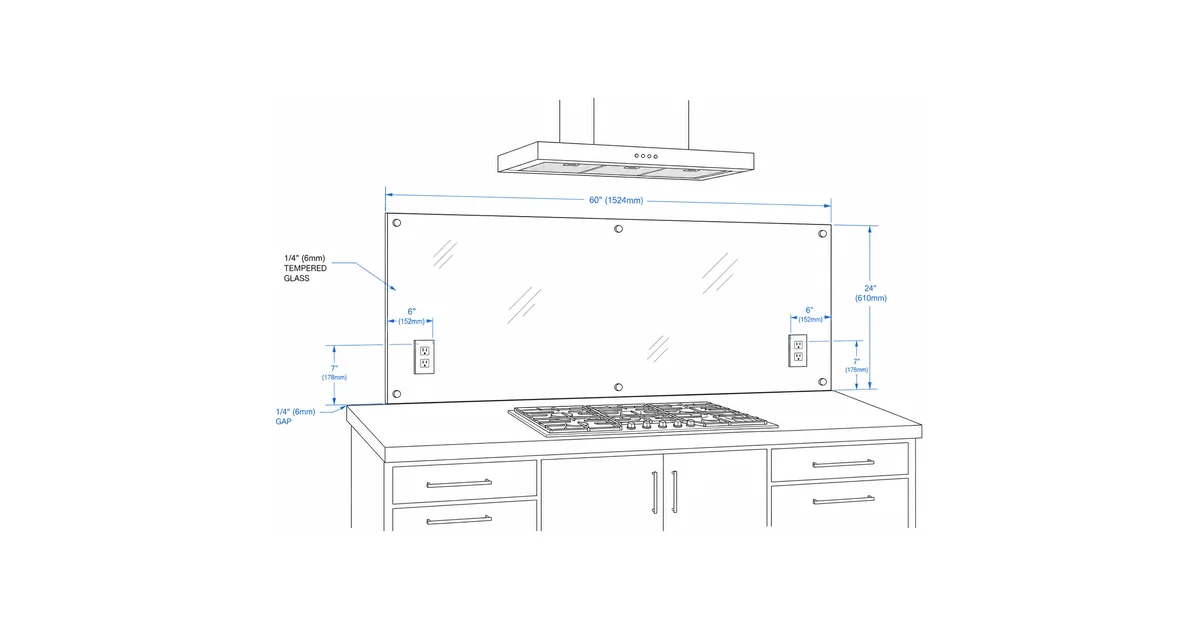
A glass backsplash in Sacramento usually runs about $45 to $95 per square foot installed for back-painted tempered glass, versus roughly $25 to $65 per square foot for tile (Installix; HomeAdvisor, 2025). A stock white panel sits near the bottom of that range. A custom color-matched, low-iron, fully tempered slab climbs toward the top. Those are national and California-wide planning ranges, not a fixed Sacramento price. The only number that matters for your kitchen is a measured quote on your actual run, color, and cutouts. Below is how the options move the total, so you read your quote with confidence.
Key Takeaways
- Budget roughly $45-$95/sq ft installed for back-painted tempered glass, about 40 to 60 percent more than comparable tile (Installix).
- Tempered glass is the standard behind a range because it handles thermal shock and meets safety glazing rules (New Angle Beveling).
- The big appeal is the seamless, grout-free surface that wipes clean and never stains at the joints (Seattle Times).
- Tempered glass cannot be cut after it is made, so every outlet and switch cutout must be templated before the panel is fabricated (Rocketroseart, 2025).
How much does a glass backsplash cost in Sacramento?
Plan on $45 to $95 per square foot installed for a back-painted tempered glass backsplash in 2026, against roughly $25 to $65 per square foot for tile (Installix; HomeAdvisor, 2025). Across most 2025 estimates, back-painted glass runs about 40 to 60 percent more than comparable ceramic tile (Installix). Color, thickness, and tempering all push the number around. Treat these as planning ranges to localize with a real quote, not Sacramento averages.
Two things drive the price. First is the glass itself: a stock white panel costs less than a custom Pantone or Benjamin Moore color match, which adds a coating and polishing step (ABC Glass & Mirror). Second is labor. Glass panels demand specialized handling, with labor often quoted around $18 to $40 per square foot to set fragile material cleanly (Installix).
| Option | Typical range | Notes |
|---|---|---|
| Stock white back-painted glass | ~$45/sq ft installed and up | Standard color, no special order (ABC Glass & Mirror) |
| Custom color-matched, tempered | Toward $95/sq ft installed | Matched paint, low-iron, polished (Installix) |
| Glass labor only | ~$18-$40/sq ft | Specialized handling of fragile panels (Installix) |
| Old backsplash removal | ~$2-$5/sq ft | Demo and disposal, if needed (HomeAdvisor, 2025) |
Glass backsplash vs tile: what you are really paying for
A glass backsplash is a single back-painted or clear glass panel bonded to the wall, with no grout lines. The premium over tile buys a seamless, grout-free, heat-resistant surface (Installix). Tile wins on a few fronts worth weighing before you commit.
| Factor | Back-painted glass | Tile |
|---|---|---|
| Installed cost | ~$45-$95/sq ft | ~$25-$65/sq ft |
| Grout lines | None | Yes, can stain |
| Cleaning | Wipe in seconds | Scrub the grout |
| Reversibility | Hard to change | Re-grout or patch |
| Scratch resistance | Lower | Higher |
Sources: cost and trade-offs per Installix and HomeAdvisor, 2025.
Glass is the harder-to-reverse choice. Tile can be re-grouted, patched, or swapped tile by tile, while a glass panel is a commitment, so pick the color carefully up front (Installix). Tile also resists scratches better in a high-traffic kitchen (Installix). What glass gives back is the look and the cleanup: one impermeable, joint-free surface that wipes down in seconds and never grows stained grout (Seattle Times).
What glass options should I choose?
For a kitchen, the panel should be tempered, and for a true color you want low-iron glass. Back-painted glass can be matched to virtually any Pantone, RAL, Benjamin Moore, or Sherwin-Williams color (ABC Glass & Mirror). But the paint reads through the glass, so the glass type changes the shade you actually see.
Back-painted glass is a clear panel with color applied to the rear face, so the front stays a smooth, glossy, wipeable surface (ABC Glass & Mirror). Low-iron glass is extra-clear glass with the green tint of ordinary plate glass removed, which is why it is the right base for an accurate color match (Dillmeier Glass).
Standard clear glass carries a green cast that distorts the paint behind it, an effect that gets worst on light, white, and pastel shades (Element Designs). For an all-white backsplash especially, low-iron is essential to avoid a dingy green look (Creative Mirror & Shower). Most panels are quarter-inch thick, tempered for a kitchen (Seattle Times).
In the field, the request I hear most is a clean white over white cabinets. Nine times out of ten the homeowner is picturing low-iron without knowing the term, because a standard pane would muddy that white. We always show a sample against the actual cabinet finish before anything goes to fabrication.
Is glass safe behind the range? The tempered note that matters
Yes, with the right glass. Building codes call for non-combustible materials behind a range, and glass qualifies alongside tile, stone, and stainless (America’s Dream HomeWorks). The catch is heat. For a panel directly behind the cooktop, use tempered glass so it handles the thermal shock and meets safety glazing rules (New Angle Beveling).
Tempered glass is the industry standard for these wall applications (Installix). Safety glazing rules trace back to the residential code, with the International Residential Code addressing it under Section R308 (America’s Dream HomeWorks). Local codes can add requirements, and clearance distances vary by whether the range is gas or electric, so confirm the specifics with your local building department (New Angle Beveling).
This is where a pro earns the cost. Tempered glass cannot be cut, drilled, or altered after it is heat-treated (Rocketroseart, 2025). Get the size or an outlet cutout wrong and you do not trim it, you reorder the whole panel. Pairing that with heat-rated glass behind the range is not a weekend job.
How does measurement and templating work?
Because tempered glass cannot be cut after fabrication, accurate dimensional planning is the most important step (Rocketroseart, 2025). Every outlet, switch, and fixture cutout must be templated and specified before the panel is tempered, then verified with a dry fit before final install (Rocketroseart, 2025).
Cutouts add complexity and time. Custom fabrication typically adds about 7 to 10 business days, and installation usually takes 4 to 6 hours for an average kitchen depending on the number of cutouts (Rocketroseart, 2025). Panels are bonded with adhesive and caulked along the edges, and large pieces are carried by two people so a corner does not chip or the panel does not torque and break (Seattle Times).
One thing we tell every customer: keep a record of which glass maker supplied your panel. If you ever replace a piece, the green tint varies between manufacturers, and that shift changes how the back-paint color reads through the glass (GPT Glass Paint). Low-iron glass minimizes that variability.
If you want a single seamless run, a glazier can custom-cut one or more large panels for a close-to-seamless look with no grout to stain (GPT Glass Paint). For other rooms and projects, see our custom glass work or stop by the glass and mirror shop.
Frequently asked questions
Is a glass backsplash more expensive than tile? Usually yes. Back-painted tempered glass runs about 40 to 60 percent more than comparable tile, landing near $45 to $95 per square foot installed versus roughly $25 to $65 for tile (Installix; HomeAdvisor, 2025).
Do I need tempered glass behind the stove? Yes. For a panel directly behind the range, use tempered glass to handle thermal shock and meet safety glazing requirements, and confirm clearances with your local building department (New Angle Beveling).
Clear or low-iron glass for a back-painted backsplash? Low-iron for an accurate color, especially whites and pastels. Standard clear glass has a green tint that distorts the paint behind it (Element Designs).
Can the cutouts for outlets be added after the glass is made? No. Tempered glass cannot be cut or drilled after fabrication, so all cutouts are templated and specified before tempering, then dry-fitted before install (Rocketroseart, 2025).
How long does a glass backsplash take? Custom fabrication usually adds about 7 to 10 business days, and installation runs roughly 4 to 6 hours for an average kitchen, depending on the number of cutouts (Rocketroseart, 2025).
About Capital Glazing
Capital Glazing is a licensed glazier based in Rancho Cordova, CA, serving the greater Sacramento area. We hold California CSLB License #1115205 (classifications B, C-17, and C-33), and we measure, template, fabricate, and install custom glass backsplashes, including back-painted and low-iron tempered panels. You can learn more about us on our about page.
Ready for a real number on your kitchen? Skip the national averages and get a measured quote on your run, color, and cutouts. Request a quote, email info@cglazing.com, or call us at (916) 720-9009.