
Capital Glazing guide
Frosted & Privacy Glass in Sacramento: Options & Cost (2026)
If you want privacy without giving up daylight, frosted glass is usually the answer, and in the Sacramento area it runs anywhere from about $8 per square foot for a privacy film up to $150 per square foot for switchable smart glass, installed. The right pick depends on where the glass lives, how much obscurity you need, and whether code requires a safety rating. This guide walks through every method, what each costs, and where it belongs.
Prices below are national reference ranges. West Coast markets, including greater Sacramento, often run 15 to 20 percent higher because of labor and local requirements (HomeGuide). Treat the numbers as starting points and confirm with a local quote.
Key Takeaways
- Privacy film is the cheapest route, roughly $8 to $15 per square foot installed, and works on glass you already own.
- Permanently obscured glass, acid-etched or sandblasted, runs about $25 to $50 per square foot fabricated, plus $5 to $15 to install.
- Switchable smart glass goes clear at the flip of a switch but costs $80 to $150 per square foot installed.
- Glass in and around doors, showers, and low windows almost always needs safety glazing under California Building Code Chapter 24.
What is frosted glass, exactly?
Frosted glass is glass with one surface roughened so light passes through but images do not, giving you a soft, even blur. The look can be created several ways, and the method changes the price, the durability, and whether it is reversible.
Two of the most common permanent methods get confused, so here are the definitions:
Acid-etched glass is treated with an acid solution that eats a fine, uniform matte texture into the surface. It produces a smooth, consistent frost that resists fingerprints better than sprayed coatings.
Sandblasted glass is frosted by blasting the surface with fine grit under pressure. It also gives a permanent matte finish and is the method of choice for deep custom designs and logos, though the texture can show smudges more readily.
What are the main privacy glass options?
There are five practical routes. The first three change the glass itself; the last two change the surface or the technology.
| Method | What it is | Reversible? | Best for |
|---|---|---|---|
| Acid-etched | Acid-frosted surface | No | Clean, uniform privacy |
| Sandblasted | Grit-frosted surface | No | Custom designs, logos |
| Patterned/textured | Molded relief glass | No | Decorative doors, sidelites |
| Privacy film | Applied vinyl layer | Yes | Budgets, retrofits, offices |
| Smart glass | Electric tint | On demand | Conference rooms, showers |
Patterned or textured glass, such as reeded, rain, or Flemish, casts a decorative relief that obscures the view. Coverage varies by pattern: dense textures block nearly all clear views while still letting 40 to 60 percent of light through, while open vertical reeds offer only moderate privacy (Zabitat).
How much does frosted glass cost in Sacramento?
For permanently frosted panels, expect roughly $25 to $50 per square foot for the fabricated glass, with premium or heavily custom work pushing past $75, plus another $5 to $15 per square foot for installation (Accio). Privacy film is far cheaper. Smart glass is the most expensive. Here is the full spread.
| Option | Typical installed cost (per sq ft) | Source |
|---|---|---|
| Privacy/frosted film | $8 to $15 | Angi |
| Acid-etched or sandblasted | $30 to $65 | Accio |
| Patterned/textured glass | $25 to $50 | Accio |
| Smart film (retrofit) | $25 to $55 | HomeGuide |
| Switchable smart glass | $80 to $150 | Angi |
A few cost drivers worth knowing. Thicker and tempered glass costs more per square foot than standard 1/8-inch float (T-P Top Glass). Custom etched panels can take four to twelve weeks to fabricate, so plan ahead on any job with a fixed move-in date (Accio). And small film jobs often carry a minimum charge; one installer cited a $250 floor to frost a single front-door panel (Angi).
Because every opening differs in size, access, and glass type, the honest answer on price is to request a quote. Ranges localize once we measure.
Is privacy film cheaper than etched glass?
Yes, by a wide margin. Frosted privacy film installs for about $8 to $15 per square foot, with labor running $3 to $7 per square foot or $35 to $75 an hour (Angi). Etched or sandblasted glass costs several times that because you are paying for the glass plus a labor-intensive finishing process.
The trade-off is permanence and feel. Film sits on the surface and can peel or scratch over years, but it is removable and works on glass you already own, which makes it ideal for renters and offices. Etched glass is integral to the pane, so it never peels and reads as higher-end.
What about smart glass?
Switchable smart glass uses a thin PDLC layer between two panes that turns from opaque to clear when you apply a small electric current. PDLC windows run about $85 to $150 per square foot, and switchable tinting glass lands around $80 to $140 (Angi). The commonly cited installed average across sources is roughly $100 per square foot (HomeGuide).
A cheaper path exists if you already have glass: PDLC smart film applies to an existing pane and runs about $25 to $55 per square foot (HomeGuide). Power draw is modest, roughly 5 watts per 10 square feet, about the same as a 60-watt bulb spread over 120 square feet (HomeGuide). One caution: in a power outage, PDLC defaults to opaque, so plan for that in a room you need to see into.
Where is each option used?
Different rooms call for different methods. Here is how we usually steer Sacramento clients.
Bathrooms
Bathrooms want maximum, even obscurity, so acid-etched glass or a dense frosted film are the go-to picks. Note that glass in or near a tub or shower is a code-designated hazardous location when its bottom edge sits below 60 inches, which means it must be safety glazing (Fine Homebuilding).
Offices and conference rooms
Offices lean on privacy film for partitions because it is fast, reversible, and easy to brand with a logo cut. For a higher-end conference room where you want privacy on demand and full transparency the rest of the time, switchable smart glass earns its premium (Angi).
Doors and sidelites
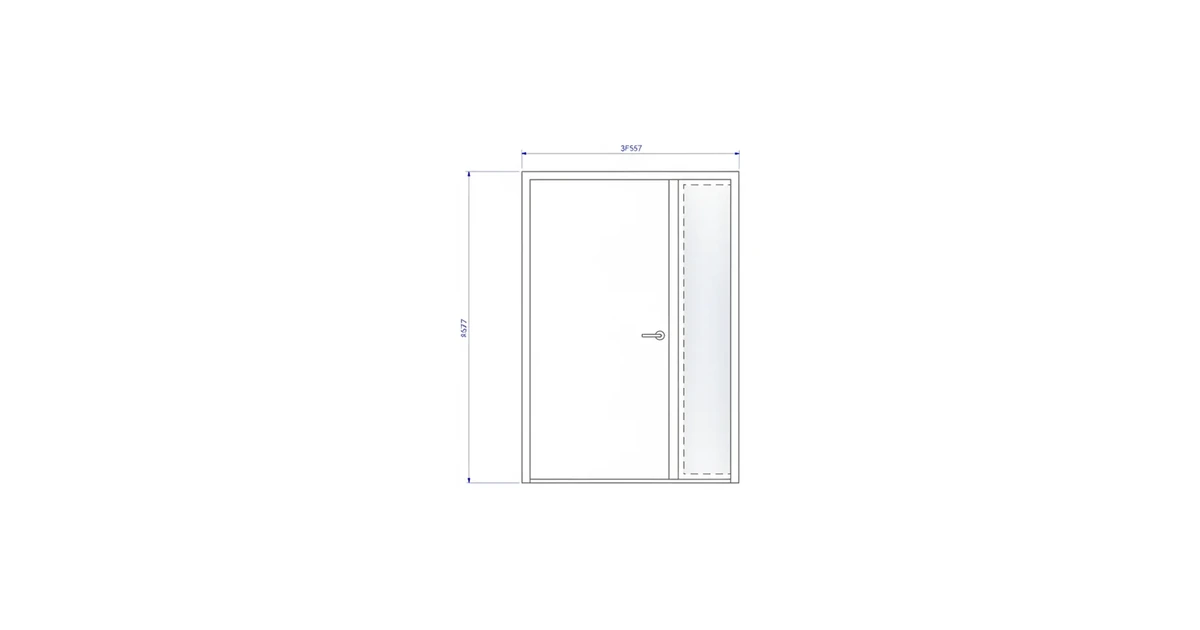
Entry doors and the narrow sidelites beside them are a classic spot for patterned or frosted glass, and they glow beautifully with the right texture. A common best-of-both approach is a higher-privacy textured glass in the door paired with frosted sidelites (Therma-Tru). Both door and sidelite glass typically must be tempered.
When does code require tempered safety glass?
Often, especially near doors and wet areas. California Building Code Chapter 24 (Section 2406) names specific hazardous locations that require safety glazing. That includes the glass in all swinging, sliding, and bifold doors; sidelite panels whose nearest edge sits within a 24-inch arc of a door and below 60 inches; and glazing in tub, shower, and pool enclosures below 60 inches (UpCodes).
Frosting does not exempt a panel from this. If the location is hazardous, the glass underneath the frost still has to be tempered or laminated. A small exception exists for openings too small to pass a 3-inch sphere, and for certain decorative glazing (RiotGlass). Code is also adopted with local amendments, so the safe move is to verify with your building department or a licensed glazier before ordering.
In the field, the spot people forget is the sidelite. A homeowner orders a beautiful etched panel for the window beside the front door, not realizing it falls inside that 24-inch arc and needs to be tempered. Catching that before fabrication saves a four-week reorder.
This is exactly why a licensed glazier matters. Capital Glazing holds CSLB License #1115205 (classifications B, C-17, and C-33), so we size the glass, confirm the safety rating, and handle the obscure-plus-tempered combination correctly the first time. We do this work as part of our custom glass services, and you can see the full range at our glass and mirror shop.
Frequently asked questions
Does frosted glass let light in?
Yes. That is its main advantage over a curtain or solid panel. Frosted glass scatters light so you keep a bright room while blocking the view. Denser frosts and patterns trade a little daylight for more obscurity.
Can you frost glass you already have?
Yes. Privacy film and PDLC smart film both apply to existing panes, which makes them the budget-friendly retrofit options. Permanent etching is done on the glass before installation, so it usually means a new panel.
Which frosted glass option is most private?
A dense acid-etched finish or a heavy frosted film gives the most uniform, total obscurity. Patterned glass can match that, but only if you choose a high-opacity pattern; open reeds and light textures leave gaps in coverage.
Is frosted glass hard to clean?
No, but technique helps. A smooth acid-etched surface resists smudges better than sandblasted or sprayed finishes. Use a gentle glass cleaner and a soft cloth, and avoid abrasive pads that can mar the matte texture.
How long does custom frosted glass take?
Standard frosted panels move quickly, but custom etched or sandblasted designs can take four to twelve weeks to fabricate (Accio). On any project with a deadline, order early so a schedule slip does not leave an opening uncovered.
About Capital Glazing
Capital Glazing is a licensed glass and glazing contractor based in Rancho Cordova, California, serving the greater Sacramento area. We hold CSLB License #1115205 with B, C-17, and C-33 classifications, and we handle frosted, patterned, switchable, and tempered glass for homes and businesses. Learn more about us.
Ready to add privacy without losing the light? Request a quote, email info@cglazing.com, or call us at (916) 720-9009.