
Capital Glazing guide
Custom Glass Shelves in Sacramento: Cost & Options (2026)
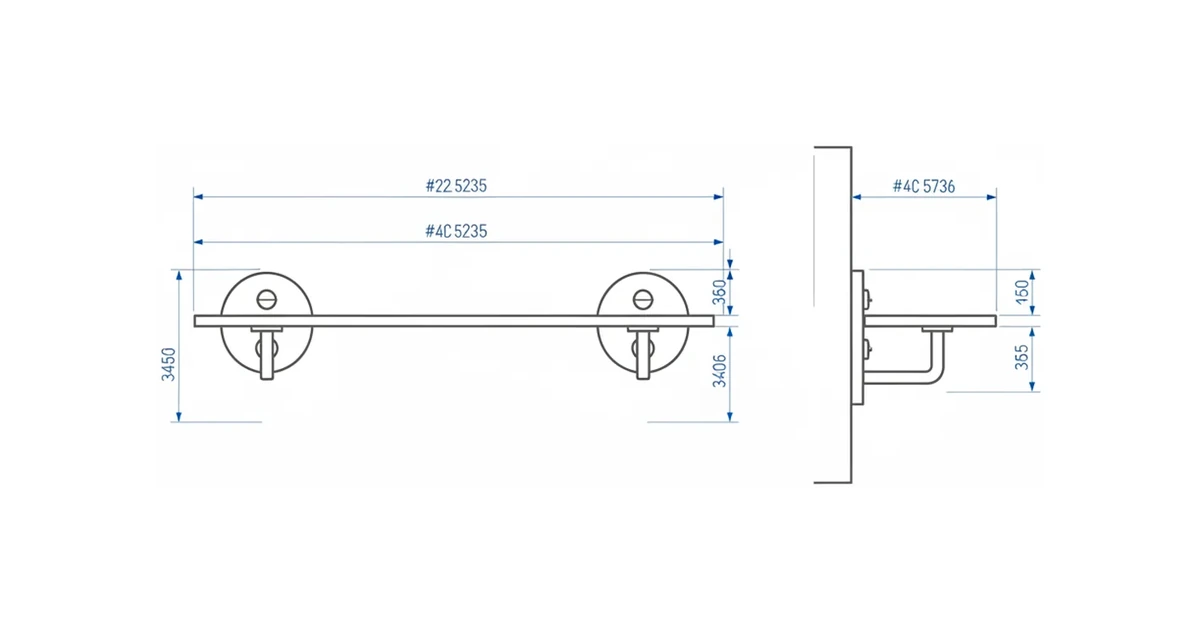
Custom glass shelves in Sacramento usually start around $10 to $30 per square foot for the tempered glass itself, with edge finishing and mounting hardware added on top (Fab Glass and Mirror, 2026). A small 1/4-inch bathroom shelf lands near the bottom of that range. A thick 3/8-inch retail display ledge climbs past it. Those are national and California-wide planning ranges, not a fixed Sacramento price. The number that matters for your wall is a measured quote on your actual span, load, and finish. Below is how thickness, edges, brackets, and load capacity move the total, so you read your quote with confidence.
Key Takeaways
- Budget roughly $10-$30/sq ft for clear tempered glass, then add edge work and brackets; specialty finishes and shapes run higher (Fab Glass and Mirror, 2026).
- Thickness drives both load and span: 1/4-inch suits light, short shelves; 3/8-inch carries heavier loads with less flex (PrimePro Glass).
- Tempered is the standard for shelving because it is 4 to 5 times stronger than annealed and breaks into small dull pieces (ThinkGlass).
- Span matters more than people expect. Adding a center support or tightening bracket spacing sharply raises safe capacity (Davies Decor).
How much do custom glass shelves cost?
Plan on $10 to $30 per square foot for clear tempered glass cut to size in 2026, before edges and brackets (Fab Glass and Mirror, 2026). Edge finishing and hardware are quoted separately, so a small shelf can total well under a hundred dollars while a long, thick display run climbs into the hundreds. Thickness, size, edge style, and mounting all shift the number.
Two things surprise people. First, the glass and the edge work are priced on different units. Glass is priced by the square foot, while edge polishing is priced by the linear foot of perimeter (Fab Glass and Mirror, 2026). Second, tempered glass cannot be cut, drilled, or notched after it is heat-treated, so every hole for a standoff or bracket must be planned before tempering (Fab Glass and Mirror, 2026). Cut it after, and it shatters.
Here is how common shelf options tend to stack up. Treat these as planning ranges to localize with a real Sacramento quote, not Sacramento averages.
| Item | Typical range | Notes |
|---|---|---|
| Clear 1/4-inch tempered glass | ~$10-$20/sq ft | Standard light-duty shelf stock (Rent Bottom Line, 2025) |
| Specialty or shaped 1/4-inch | ~$20-$30+/sq ft | Custom shapes, tints, finishes (Rent Bottom Line, 2025) |
| 3/8-inch and thicker | Higher per sq ft | More glass and weight to handle (Mannlee) |
| Seamed edge | Included | Lightly sanded, economical baseline (Fab Glass and Mirror, 2026) |
| Flat polished edge | Add ~$2-$5/linear ft | Clean, glossy, showcase finish (Fab Glass and Mirror, 2026) |
| Brackets or standoffs | Hardware line | Varies by style and load rating |
A plain annealed panel might run $5 to $7 per square foot, but the tempered version of the same panel runs $10 to $20 because of the heat-treatment process (Rent Bottom Line, 2025). For shelving, that upgrade is not optional in our book. More on why below.
What thickness should a glass shelf be?
Match thickness to load and span. 1/4-inch (6mm) is the common choice for light, short bathroom and cabinet shelves, while 3/8-inch (10mm) is the workhorse for kitchens, books, and retail display that carry real weight (Glass Helper). Going thicker than needed wastes money. Going thinner on a long, loaded span invites flex and failure.
Capacity rises fast with thickness. Standard 1/4-inch tempered shelves typically support around 10 to 15 pounds per square foot, while 3/8-inch shelves may hold 30 to 40 pounds per square foot with proper support, roughly tripling capacity for one step up (Davies Decor). Thinner stock can be fine, but it is the least forgiving if the span or support is wrong, and it bows under moderate weight (Glass Helper).
Tempered glass is glass that has been heated and rapidly cooled so it becomes 4 to 5 times stronger than standard annealed glass of the same thickness, and it shatters into small, dull pebbles instead of sharp shards if it ever breaks (ThinkGlass).
| Use | Common thickness | Why |
|---|---|---|
| Bathroom, light items | 1/4 inch (6mm) | Short spans, low load (Glass Helper) |
| Kitchen, dishes, decor | 3/8 inch (10mm) | Heavier, less flex (Glass Helper) |
| Retail or heavy display | 3/8 inch or thicker | Public traffic, point loads (Glass Helper) |
How much weight can a glass shelf hold?
It depends far more on span and support than on the glass alone. The distance between supports has an inverse relationship with capacity, so a few extra inches of unsupported span drops the safe load sharply (PrimePro Glass). A 1/4-inch shelf is generally kept to about a 24-inch span; step up in thickness or add support for anything longer (Davies Decor).
The fix is support, not just thicker glass. For heavier loads, keep brackets no more than 12 to 16 inches apart to shorten the unsupported span and cut bending stress (PrimePro Glass). Adding a single center bracket to a long shelf can nearly double its effective capacity (Davies Decor). Whatever the bracket, it has to anchor into wall studs or load-rated anchors, or the wall fails before the glass does (PrimePro Glass).
In the field, the number one cause of a sagging or cracked shelf I see is not thin glass. It is a long span with too few supports, often a heavy floating shelf hung on hardware that was never rated for the load. Span discipline saves shelves.
Brackets, standoffs, or floating: which mount?
Pick the mount for your load first, then your look. Visible metal brackets are the strongest and most forgiving on uneven walls; floating (hidden) mounts give the cleanest look but carry less weight; standoffs hold the glass off the wall on polished metal posts as a deliberate design feature (Glass Helper, UK). For anything beyond a few light items, brackets are the safer call.
Floating shelves hide their hardware for a minimalist, modern look, but they demand precise, level installation and tend to be less robust than bracketed shelves (Glass Helper, UK). Bracketed shelves attach directly to studs, spread the load across the strongest part of the wall, and forgive slightly uneven framing (Glass Helper, UK). Whichever you choose, the brackets should be glass-rated with rubber or silicone pads so the metal never bites bare glass.
| Mount | Look | Strength |
|---|---|---|
| Metal bracket | Visible, can be industrial or decorative | Highest, most forgiving |
| Floating / hidden | Cleanest, minimalist | Lower, for light loads |
| Standoff | Modern, hardware on show | Moderate, holes pre-drilled |
What edge finish is best for shelves?
For shelving, the two go-to finishes are flat polish and pencil polish. A flat polished edge gives a clean, glossy face that showcases the glass thickness, which is why it suits the thicker stock used in shelves (Two Way Mirrors). A pencil polished edge is rounded like a pencil eraser, so it is harder to catch a hand on and is a popular, safer choice for exposed shelf edges in high-traffic spots (Ryan’s All Glass).
A seamed edge is only lightly sanded to take off the sharpness and comes as the economical baseline; a polished edge is ground glossy and adds cost per linear foot (Fab Glass and Mirror, 2026). On a shelf people touch daily, I usually steer clients toward a pencil polish. The rounded profile is friendlier on knuckles and on kids.
Why tempered, and why a shop?
Tempered is the right call for shelving on both strength and safety. The heat-treatment makes the glass several times stronger than ordinary glass and gives it real resistance to impact and thermal stress, which matters in a steamy bathroom or a busy kitchen (ThinkGlass). If it ever does break, it crumbles into small dull pebbles instead of long shards, which is exactly what you want above a sink or a sales counter (ThinkGlass).
This is where a glazier earns the fee. Because tempered glass cannot be touched after treatment, the cut size, the edge, and every bracket or standoff hole have to be specified and drilled before tempering (Fab Glass and Mirror, 2026). Get the load and span right, choose the mount, and the shelf lasts for years. Our glass and mirror shop in Rancho Cordova cuts, tempers, and finishes to spec, and our custom glass work covers shapes, tints, and edge treatments beyond plain rectangles.
Frequently asked questions
Do glass shelves have to be tempered? For shelving, tempered is strongly recommended. It is far stronger than annealed glass and breaks safely into small pieces, which is why it is the standard for bathroom, kitchen, and display shelves (ThinkGlass).
Can you drill holes for standoffs after the glass is tempered? No. Cutting or drilling tempered glass after treatment shatters it, so all holes and the final size must be set before tempering (Fab Glass and Mirror, 2026).
1/4-inch or 3/8-inch for my shelf? Use 1/4-inch for short, light shelves and 3/8-inch when the span is longer or the load is heavier, since 3/8-inch roughly triples the per-square-foot capacity (Davies Decor).
How far apart should the brackets be? Tighter spacing holds more. For heavier loads, keep supports no more than 12 to 16 inches apart, and add a center bracket on long shelves to nearly double capacity (PrimePro Glass).
What edge should I pick for a shelf? Flat polish for a sleek, glossy look that shows off the thickness, or pencil polish for a rounded, safer edge in spots people touch often (Ryan’s All Glass).
About Capital Glazing
Capital Glazing is a licensed glazier based in Rancho Cordova, CA, serving the greater Sacramento area. We hold California CSLB License #1115205 (classifications B, C-17, and C-33), and we cut, temper, finish, and install custom glass shelves for homes, bathrooms, kitchens, and retail display. You can learn more about us on our about page.
Ready for a real number on your shelves? Skip the national averages and get a measured quote on your span, load, and finish. Request a quote, email info@cglazing.com, or call us at (916) 720-9009.